
The Best Coffee for a Moka Pot, and How to Brew It Without Bitterness
The best coffee for a moka pot is a medium to medium-dark roast ground about like fine drip coffee: fine, but not powdery. Fill the basket level without tamping, add water to just below the safety valve, brew over medium-low heat, and take the pot off the burner as soon as it starts to sputter. Too much heat for too long is what turns it bitter.
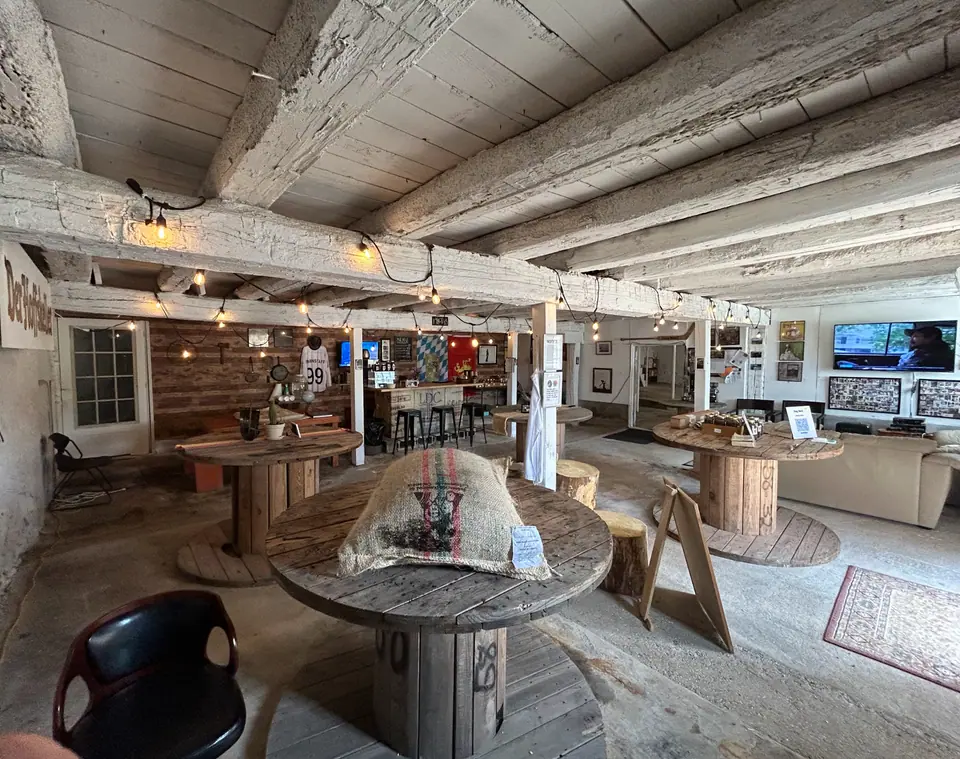
We roast one coffee in cast iron in our family's barn in Cedarburg, Wisconsin: 100% Colombian Supremo Arabica, medium-dark, in the German Norwegian style. Our ground coffee is one medium-fine grind, right where a moka pot wants it. The steps below work whichever coffee you buy.
Grind and roast: what a moka pot needs
Grind matters more than almost anything else in a moka pot. The Sweet Maria's moka pot tip sheet describes the right grind as "fine, but not powdery, about the same as a fine filter drip." Bialetti's New Zealand site recommends medium-fine, gritty between your fingers rather than soft like powder. Too fine and the water struggles through, so the pot sits on the heat longer and the coffee turns bitter. Too coarse and the water rushes through and the cup tastes weak.
Our ground coffee comes in that one medium-fine grind, so it goes straight into the basket. If you grind at home, buy whole bean and set your grinder a little finer than for a drip machine, stopping short of powder. Our guide to whole bean vs. ground coffee helps you choose.
Roast comes next. A moka pot makes a small, strong cup, and strength magnifies whatever is in the coffee. Medium and medium-dark roasts suit it well because they bring body and a rounder taste. Very light roasts can taste sharp here, and very dark, oily roasts can turn smoky and harsh. Ours is one roast that releases beans at different points, so each batch holds a spread of roast levels. More in what medium-dark roast means and what makes German coffee German.
“I absolutely love this coffee. This is probably the best I've ever had. It is great in my little mokapot and I'll be ordering again. It is smooth and comforting.”
Megan, verified buyer, May 2026
How to brew in a moka pot, step by step
- Fill the base with water to just below the safety valve. The valve has to stay clear, and Bialetti notes that an overfilled base gives boiled coffee with a bitter or burnt taste.
- Fill the basket and level it off. Heap the coffee in loosely and sweep the top flat with a finger. Do not press it down: the coffee swells as it gets wet and packs itself. A moka pot is made to brew full, so fill the basket every time.
- Wipe the rim. Brush loose grounds off the basket edge and the threads so the gasket seals, then screw the top on firmly.
- Set it on medium-low heat with the lid open. On gas, keep the flame under the base, not up the sides, which can scorch the pot and the handle.
- Watch and listen. Coffee should rise in a steady, dark stream. Sweet Maria's puts a full brew at about 5 minutes, and Bialetti says 3 to 6. If yours takes much longer, raise the heat a little next time.
- Pull it at the first gurgle. When the stream turns pale and the pot starts to sputter, take it off the heat. That last rush is steam forcing through spent grounds, and it carries the harshest flavors. Some people run the base under cold water to stop it at once.
- Stir and pour. The first coffee out is the strongest, so stir the top chamber. Drink it as it is in small cups, add hot water for a longer cup, or pour it over warm milk.
Fixing bitter or burnt moka coffee
Most bitter moka coffee comes down to heat and time. The longer and hotter the pot runs, the more harsh flavor reaches the cup. Customers describe our coffee as smooth, bold and low in acid, but no coffee holds up to a pot left on high. Start with the heat, then work down this list.
| What you taste or see | Likely cause | What to change |
|---|---|---|
| Bitter, burnt or ashy | Heat too high, or the pot stayed on after it sputtered | Medium-low heat; pull it at the first gurgle and cool the base |
| Thin and weak | Basket not full, or grind too coarse | Fill the basket level every time; grind a little finer |
| Slow, or barely comes up | Coffee tamped, grind too powdery, or a clogged filter screen | Leave the coffee loose; grind a little coarser; clean the screen |
| Steam leaks from the middle | Grounds on the rim, loose threads or a worn gasket | Wipe the rim, screw it tighter, replace the gasket |
| Stale or musty taste | Old coffee oils in the pot | Hand wash after every use (Bialetti says no dishwasher) and dry the parts apart |
Two more habits help. Pour the coffee soon after it brews instead of leaving it on a warm burner. And use fresh coffee: we roast in small batches on a regular schedule, and it ships within days of roasting in nearly all cases. For other brewers, see why coffee tastes bitter and how to fix it.
Moka pot vs espresso machine
A moka pot makes stovetop coffee, not true espresso. Steam builds in the base and pushes hot water up through the coffee at much lower pressure than an espresso machine uses. You get a small, strong, full-bodied cup with little or none of the crema a machine pulls. The "cups" on the box are espresso cups: Bialetti's New Zealand site puts a cup at about 30 ml and a 3-cup pot at about 130 ml (4.4 oz) of coffee.
Own an espresso machine too? We do not sell a separate espresso roast, but our roast pulls well as espresso. After a chat with Max, one of the brothers who roast here, and a couple of samples, Jim B wrote that “their coffee makes wonderful espresso” (Facebook, September 2025). Our ground coffee works for espresso as it comes, and whole bean is there if you grind at home.
Which of ours fits a moka pot
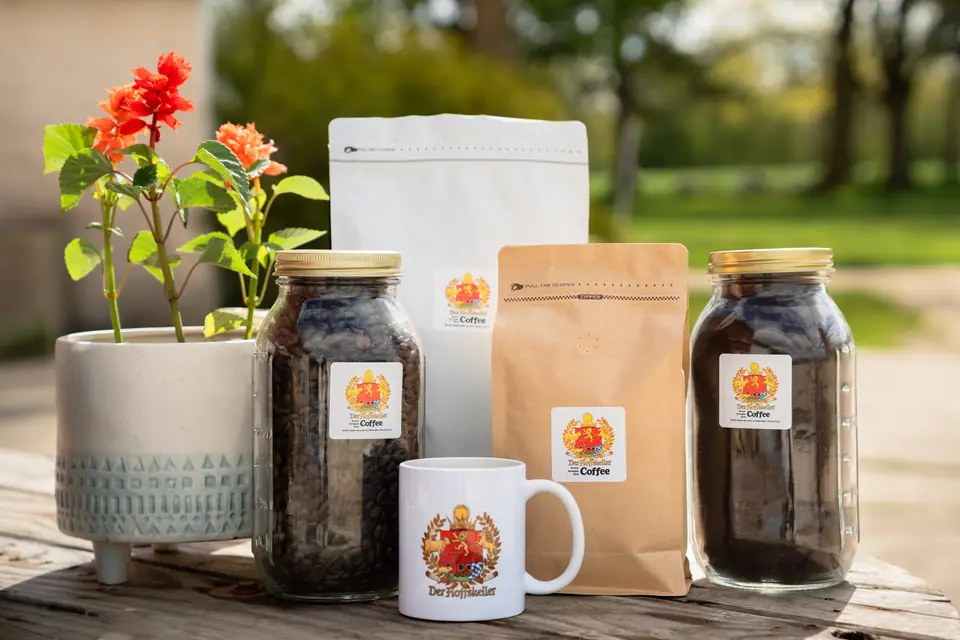
Our ground coffee goes in as it comes. To try it, the Little Hoff, ground is a half pound for $15. For a pot most mornings, The Hoff, ground is 1 lb for $25, and the Big Hoff Bag, ground is 2 lb for $34. If you grind at home, every size comes whole bean too, such as The Hoff, whole bean. Here is roughly how far a bag goes:
| Moka pot size | Brews about | Coffee per pot (about) | Pots from 1 lb (est.) | Pots from 2 lb (est.) |
|---|---|---|---|---|
| 3-cup | 130 ml (4.4 oz) | 13 g | 35 | 70 |
| 6-cup | 250 ml (8.5 oz) | 26 g | 17 | 35 |
| 9-cup | 410 ml (13.9 oz) | 38 g | 12 | 24 |
| 12-cup | 595 ml (20 oz) | 50 g | 9 | 18 |
These are estimates: brewed volumes from Bialetti's New Zealand site, doses from Whole Latte Love's Moka Express specifications, and 453.6 g to the pound. Baskets vary, so weigh one level fill of yours. At the Big Hoff Bag's $34 one-time price ($17 a pound), a 3-cup pot uses about 49 cents of coffee.
Shipping is free on orders of $50 or more, by USPS to US addresses, and orders typically go out within a few business days.

Ours is not the right coffee for every moka pot. We make one coffee: no decaf, no flavors, no pods and no light roast. For a decaf pot after dinner, a good decaf from another roaster is the right call. If you love a bright, fruity cup, a light roast will suit you better, and if you want the flavor of a classic Italian bar, an Italian espresso blend made for the moka pot is the better pick. If you want a smooth, traditional cup you can drink without cream, ours fits. More in coffee you can drink black.
Moka pot questions
Do you tamp coffee in a moka pot?
No. Fill the basket, level it off with a finger and leave it loose. The coffee swells as it gets wet and packs itself. Tamping makes it harder for the water to get through, which slows the brew and can turn the cup bitter.
Should I start with hot or cold water?
Either works. Bialetti and Sweet Maria's simply say to fill the base with water and use low to medium heat. Many people start with water just off the boil so the coffee spends less time warming up on the burner. If you do, hold the hot base with a towel while you screw on the top.
How fine should coffee be for a moka pot?
Fine, but not powdery, about like a fine drip grind. Medium-fine is the usual description: gritty between your fingers, not soft like flour. Ours comes medium-fine.
Can I use regular ground coffee in a moka pot?
Yes. Most pre-ground coffee works, though coffee ground on the coarse side can brew fast and taste thin. If that happens, make sure the basket is full and level, and look for a finer grind. Ours is medium-fine and suits a moka pot as it comes.
Low heat, a level basket, fresh coffee
Medium-low heat, a loose and level basket, and off the burner at the first gurgle: that is most of it. Working out another brewer? Browse more coffee guides. Prost from the barn in Cedarburg.