
What Is Medium-Dark Roast Coffee? Roast Levels, Taste and Caffeine, From the Roaster
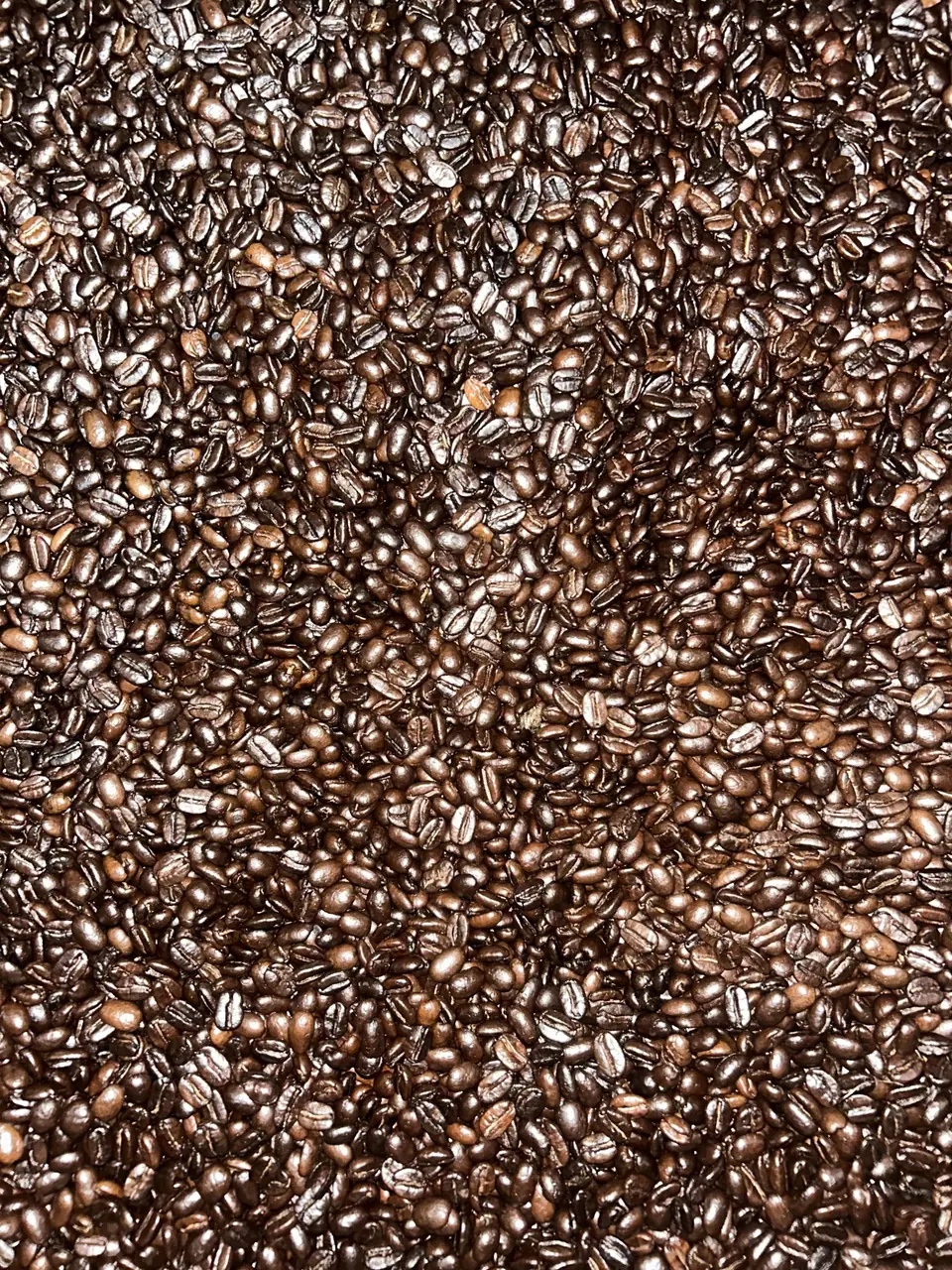
Medium-dark roast coffee is roasted past medium and stopped around the second crack, just before or just after it starts, short of a true dark roast. The bright, fruity notes of the bean give way to caramel, cocoa and a fuller body, and a light sheen of oil on the beans is normal. It tastes rich and rounded without the burnt edge of a French roast.
We roast one coffee, a medium-dark Colombian Supremo, in cast iron on our family farm in Cedarburg, Wisconsin. Here is how the roast levels compare, how medium-dark tastes, what it means for caffeine, and how to brew it.
Roast levels in one chart
In the roaster, green coffee dries, turns yellow, then brown, and cracks audibly twice. Where the roaster stops in relation to those two cracks sets the roast level.
| Roast | Where the roast stops | Color and surface | How it tastes | Names you may see |
|---|---|---|---|---|
| Light | At or just after the first crack | Light tan to light brown, dry | Bright and tart, floral and fruity | Cinnamon, New England |
| Medium | Between the first and second crack | Medium brown, mostly dry | Balanced; caramel, nuts, milk chocolate | City, City+, American, Breakfast |
| Medium-dark | Right around the start of the second crack | Deeper brown; a light sheen is normal | Fuller body; semisweet chocolate, caramel, a gentle roasted note, lower acidity | Full City, Full City+, Vienna |
| Dark | Well into the second crack or beyond | Dark brown to nearly black, oily | Smoky and bittersweet; the roast flavor leads | French, Italian |
Roast names are not standardized. Equator Coffees notes there is no uniform agreement on the definitions: one roaster's Full City can be another roaster's French roast. Published charts also put City, Full City+ and Vienna in different rows. Full City usually means a roast taken to the edge of the second crack; Full City+ goes just into it. The names can sit only a few degrees apart: Burman Coffee gives a bean temperature of about 426°F for a City roast and about 437°F for a Full City. Read the color and the description on the bag, not only the name.

What medium-dark tastes like
At medium-dark, the bean and the roast share the cup. The bean has spent long enough in the roaster to develop caramel, cocoa and toasted-nut flavors and a heavier, rounder body. The sharp, citrusy brightness of a light roast fades, which is why medium-dark usually tastes smoother and less tart. Our guide to whether dark roast is less acidic explains why.
Medium-dark is also forgiving. It stands up to cream and sugar and is good black (more in coffee you can drink black). For many people it is simply what coffee tastes like: the diner cup, the church basement urn, Grandma's stovetop pot.
“Medium-Dark roast, smooth, low acidity.”
Annette B, Facebook, July 2026
Dave R, who drinks his coffee black and says he likes light roasts, tried our coffee at the barn and then ground some of our beans at home:
“It is not bitter. It has a really nice after taste that I enjoy, but it is a little different. It's not "smokey" or "woody" tasting, it's not chocolate like. Just good, hardy coffee flavor!”
Dave R, Google, February 2026

Medium vs dark roast
Dark roast is roast-forward: smoky, bittersweet, sometimes charred, with oily beans. Medium-dark keeps more of the coffee's own character, with more sweetness and less smoke. If dark roast tastes burnt to you, medium-dark is usually the step back you want.
Medium vs medium-dark is a smaller step. Medium stops before the second crack, so it is a bit brighter and lighter in body. Medium-dark trades some of that brightness for deeper chocolate, caramel and body.
Is dark roast stronger? Not really. Strength comes from how much coffee you use. As our FAQ puts it, "Strength is mostly about how you brew rather than the roast." Roast changes the character of the cup more than its strength.
Medium-dark and caffeine
Roast level changes caffeine less than most people think. Darker beans lose a little mass in the roaster and are less dense, so whether light or dark comes out ahead depends on whether the coffee is weighed or scooped, and published tests disagree. Our FAQ says roasting burns off a small amount, so darker roasts have marginally less by bean, and by weight the difference is minor. In everyday brewing, how much coffee you use matters far more than roast level. We have not lab-tested our coffee for caffeine; it is a normal arabica coffee. The tests, the FDA range and the numbers by cup size are in our guide to how much caffeine is in a cup of coffee.
Our roast: a spread of levels in one batch
Our roast is not one color. It is one roast that releases beans at different points, so each batch holds a spread of roast levels. As our About page puts it, "By the time the first beans reach the second crack (beans crack twice during roasting) others are still a few shades lighter." The mix of medium and darker beans lands at a balanced medium-dark in the cup.
That spread is the German Norwegian style. Germans opt for a darker roast while Norwegians prefer a lighter one, and Wisconsin, like our family, has roots in both. More in our German Norwegian blend.
“The blend of dark and medium roast produced a delicious combination of smoky and sweet.”
Mark E, Google, June 2025
It is still one coffee from one origin: 100% Colombian Supremo Arabica. Supremo is Colombia's grade for the largest beans by screen size, and the blend is of roast levels, not coffees. We began in a cast iron pan, then built custom cast iron stovetop roasters, and now use a cast iron drum roaster. We leave some silverskin, the papery skin on the bean, in the roast, the way traditional roasters did. More in what cast iron roasted coffee is.
Brewing a medium-dark
Medium-dark is an easy roast to brew. It holds up in a drip machine, French press, percolator, pour over or espresso machine without tasting thin or scorched.
- Amount: start with two tablespoons of ground coffee per six ounces of water (our shop guidance) and adjust. At standard strength (the SCA golden cup ratio), a pound makes about 35 eight-ounce cups, by our estimate; see how many cups of coffee in a pound.
- Water: just off boiling, around 200°F. Boiling water poured straight onto the grounds pulls out harsher flavors.
- Grind: our ground coffee is one medium-fine grind that works for every brew method, espresso included. If you grind at home, order whole bean.
- Storage: an airtight container, like a Mason jar, in a cool, dark cupboard. We do not recommend the freezer, which introduces moisture.
Is medium-dark right for you?
If you love light, fruity roasts, ours will taste traditional, and a light-roast specialist will suit you better. We also make no decaf or flavored coffee. Medium-dark is for people who want body without scorch: a smooth, full cup that is good black.
To try ours, The Hoff (1 lb ground, $25) is a good first bag. If you brew a pot every morning, the Big Hoff Bag (2 lb whole bean, $34) works out to about 49 cents an eight-ounce cup (estimate, at 35 cups per pound). Every size comes whole bean or ground. Shipping is free on orders of $50 or more, by USPS to US addresses.

Medium-dark roast questions
Is medium-dark roast good for espresso?
Yes. It is a common roast level for espresso, giving a full-bodied shot without the sharpness of a light roast or the char of a very dark one. We do not sell a separate espresso roast, but ours pulls well as espresso, and our ground coffee works for espresso as it comes. If you grind your own right before pulling the shot, order whole bean.
Are medium-dark beans oily?
A light sheen is normal in a medium-dark roast. Oils move to the surface of the bean as the roast develops, so darker roasts look shinier. It is a sign of roast level, not of spoilage. Beans that are nearly black and slick with oil are usually a dark roast.
Is medium-dark stronger than medium?
Not by itself. Any caffeine difference between the two is small, and roast changes the character of the cup more than its strength: medium-dark tastes fuller and rounder, with less brightness. For a stronger cup of any roast, use more coffee for the same water.
Do you sell a light roast?
No. We make one coffee: a medium-dark German Norwegian style roast of 100% Colombian Supremo Arabica. If you prefer a light roast, a roaster who focuses on light, single-lot coffees will serve you better.
More from the barn
If you are still choosing, our coffee guides cover roast, brewing and buying, one plain question at a time. And if you are ever near Cedarburg, the barn at 1040 Sherman Road is open every day from 9 to 5, and the first cup is on us.