
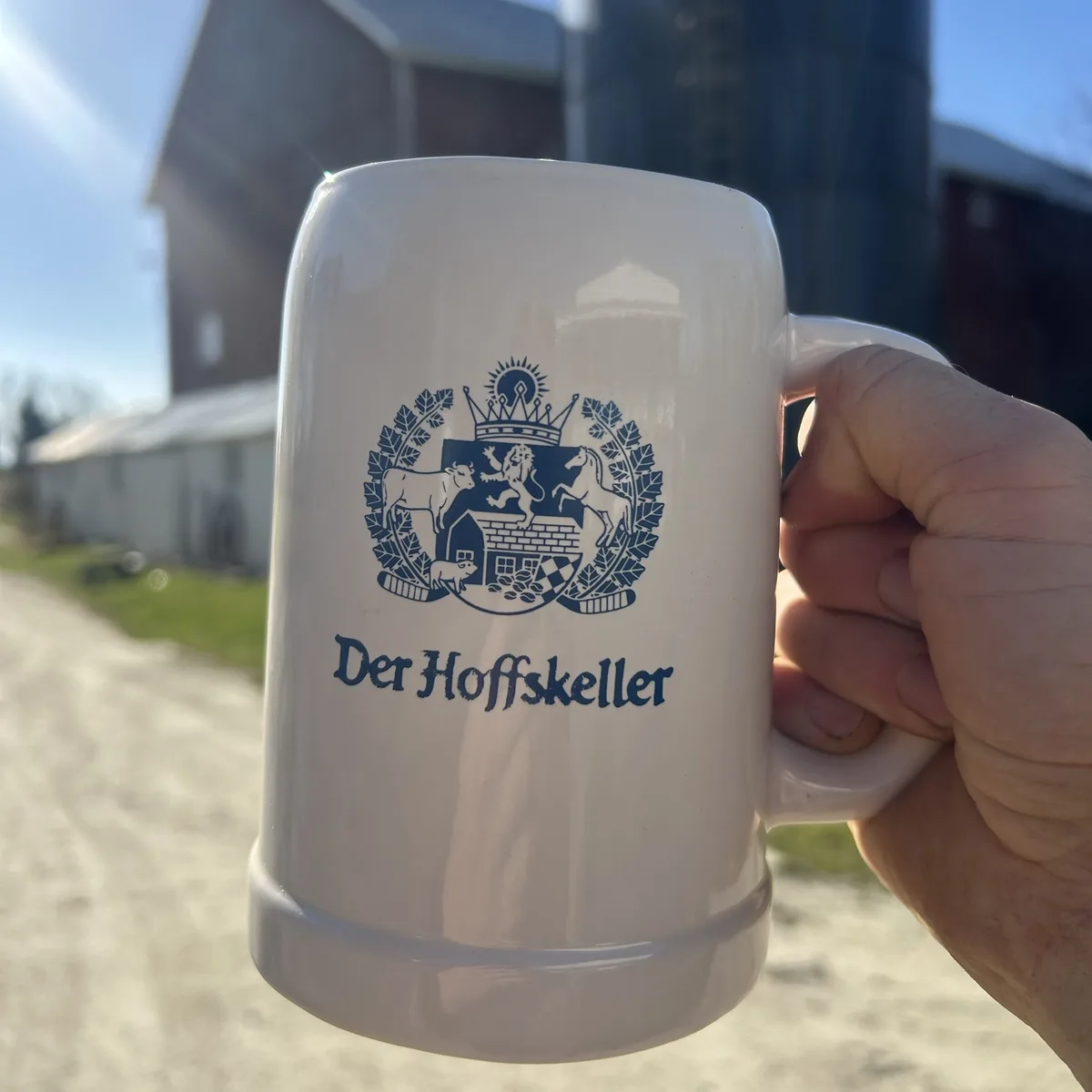
The German Beer Stein Coffee Mug: From the Beer Hall to Your Morning Coffee
A German beer stein makes one of the best coffee mugs there is: it is big, heavy, easy to hold and built to last. The stein was made for long hours at a beer hall table, and a morning pot of coffee asks for the same thing. Here is where the stein came from, the beer hall mug everyone pictures, the old Ratskeller cellars where Germans drank under the town hall, and why we made our own stein for coffee: Der Kaffeekrug.
Where the German beer stein came from
English speakers call it a stein, but that is half a word. It comes from the German Steinkrug, a jug made of Steinzeug, or stoneware: clay fired so hot it turns hard and watertight, with no glaze needed to hold a drink. In Germany people just say Krug or Bierkrug, and the big beer hall mug is a Maßkrug, from Maß, a measure of one liter.
Stoneware made the stein possible. From the late Middle Ages, potters in the Rhineland, in towns such as Siegburg, Raeren and the Westerwald region, turned out strong drinking jugs that did not leak, crack or soak up the taste of the last drink the way wood and soft clay did. The Westerwald potters became known for a grey body decorated in cobalt blue under a salt glaze. That grey and blue is still the color of a German beer mug today.
Many of those old steins wore hinged pewter lids with a thumb lever. The story usually told is that lids spread after the plague years and outbreaks of flies, when towns wanted food and drink kept covered. Historians argue over how much of that is true, but the lid stuck, and decorated lidded steins became collector pieces. The everyday beer hall mug went the other way: no lid, no fuss, just a thick handle and a lot of room.
The classic Bavarian beer hall mug
The stein most people picture comes from Munich. In 1589 Duke Wilhelm V of Bavaria founded a brewery for his own court, the Hofbräuhaus. The beer was for the court at first, but in 1828 King Ludwig I opened the brewery's tavern to everyone, and the Hofbräuhaus am Platzl became the most famous beer hall in the world.
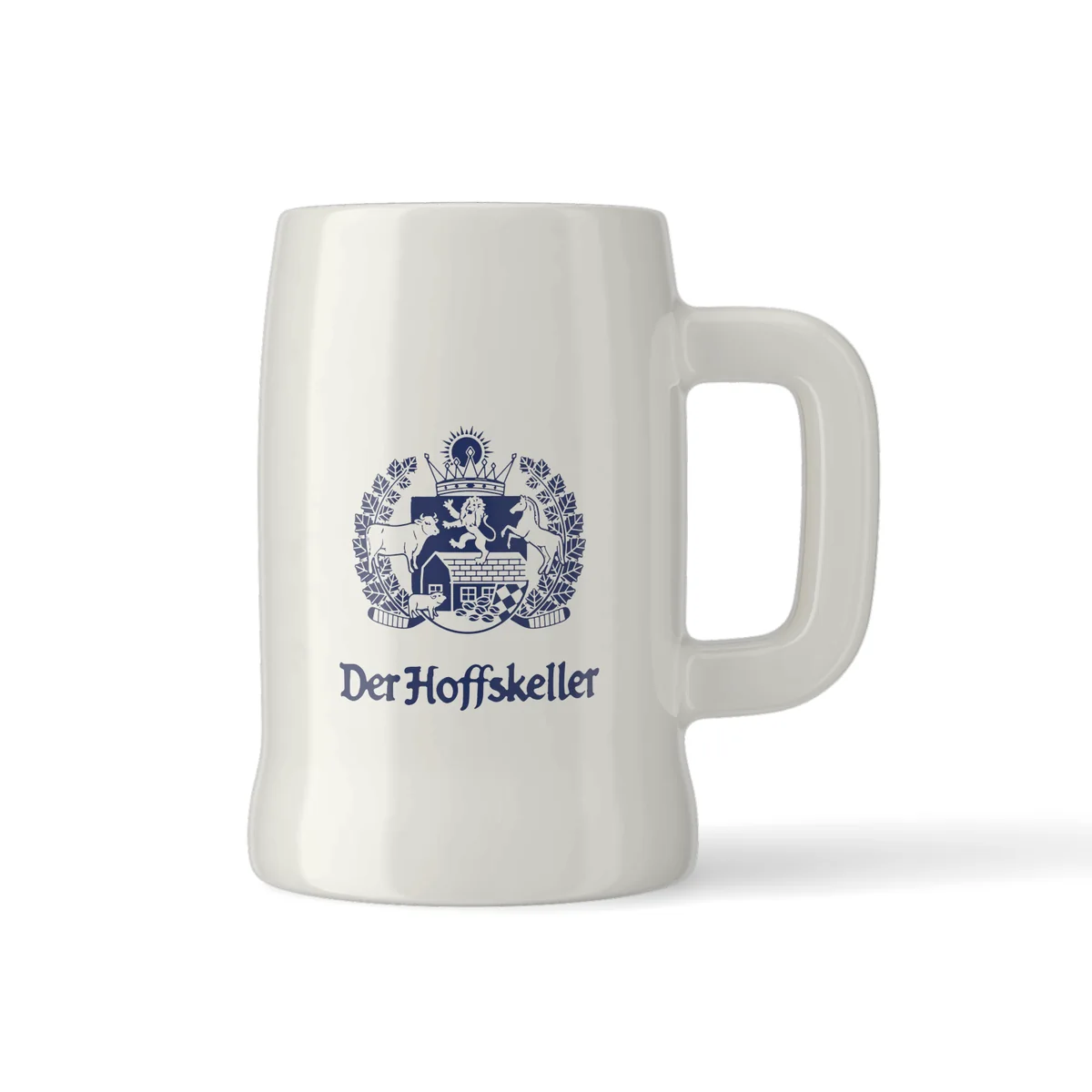
Its mug became the model for the rest. A one-liter Maßkrug in pale grey stoneware, with straight sides, a thick base, a handle you can get your whole fist around, and the blue HB monogram under a crown printed on the front. Its sides are thick enough to keep beer cold, its base heavy enough to survive a toast, and it is plain enough that the crest is the only decoration it needs. Regulars at the Hofbräuhaus have long kept their own mugs, some locked in a mug safe in the hall, waiting for the next visit.
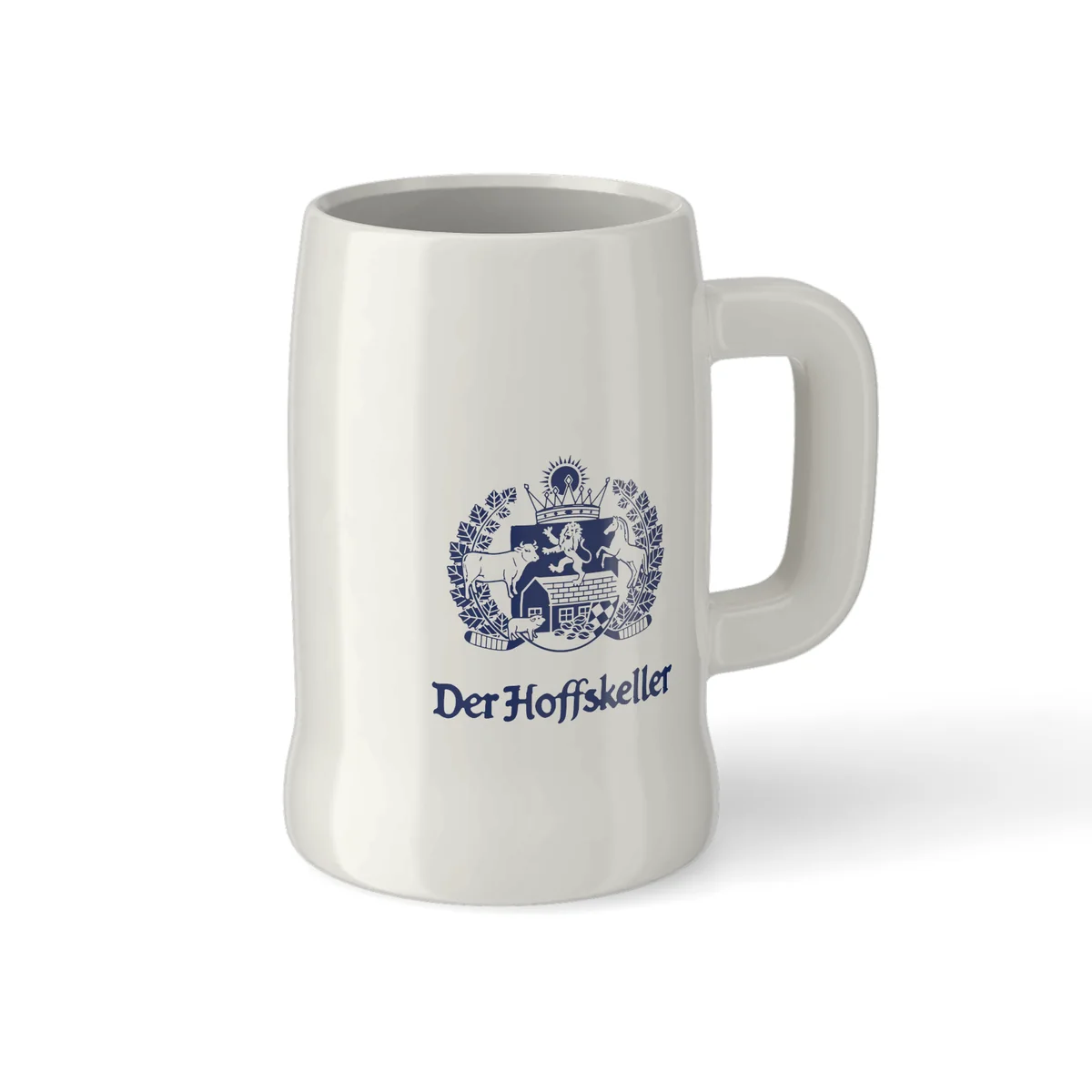
That is the look we followed: a pale grey-white body, a crest in blue on the front with a crown on top, and the straight, solid shape of a beer hall mug.
Down in the Ratskeller
Before beer halls, there were cellars. Nearly every German town had a Rathaus, a town hall, and under it a Ratskeller: a vaulted stone cellar, cool all year, where the town kept wine and beer and served it to council members, merchants and townspeople. The Bremen Ratskeller has poured wine since 1405. Munich's sits under the town hall on the Marienplatz.
Drinking down there was a long, slow thing. People sat at heavy wooden tables under brick arches, by candle and lamplight, and the same groups came back to the same table, the Stammtisch, week after week. Business got done, arguments got settled, and news traveled table to table. The mug in front of you was something you kept filling, not something you finished and left.
German immigrants brought the idea to America, where the word picked up an h and became rathskeller. Universities and towns opened German-style cellar taverns under that name. Here in Wisconsin, one of the best known is the Rathskeller in the Memorial Union at the University of Wisconsin, open since 1928.
Der Hoffskeller: a coffee shop in a barn cellar
Our name comes from the same place. Hoff means farm in Old Norse, and a skeller is a cellar like the Ratskeller. Put them together and you get a farm cellar, which is what Der Hoffskeller is: a coffee shop in the lower level of our family's 100-year-old barn in Cedarburg, Wisconsin, on land settled by German immigrants in the 1860s and in our family since 1944. We styled it after the old Ratskellers and the coffeehouses of old Europe, and we roast our coffee there in cast iron. More on that on our family story page.
What we wanted to bring back is that Stammtisch feeling: a cellar, a long table, people who come back, and a drink that keeps getting refilled. In our cellar the drink is coffee. Germans have their own coffee tradition, too: the afternoon Kaffee und Kuchen, coffee and cake, still kept in German homes and Wisconsin farm kitchens.
Der Kaffeekrug: the beer stein, made for coffee
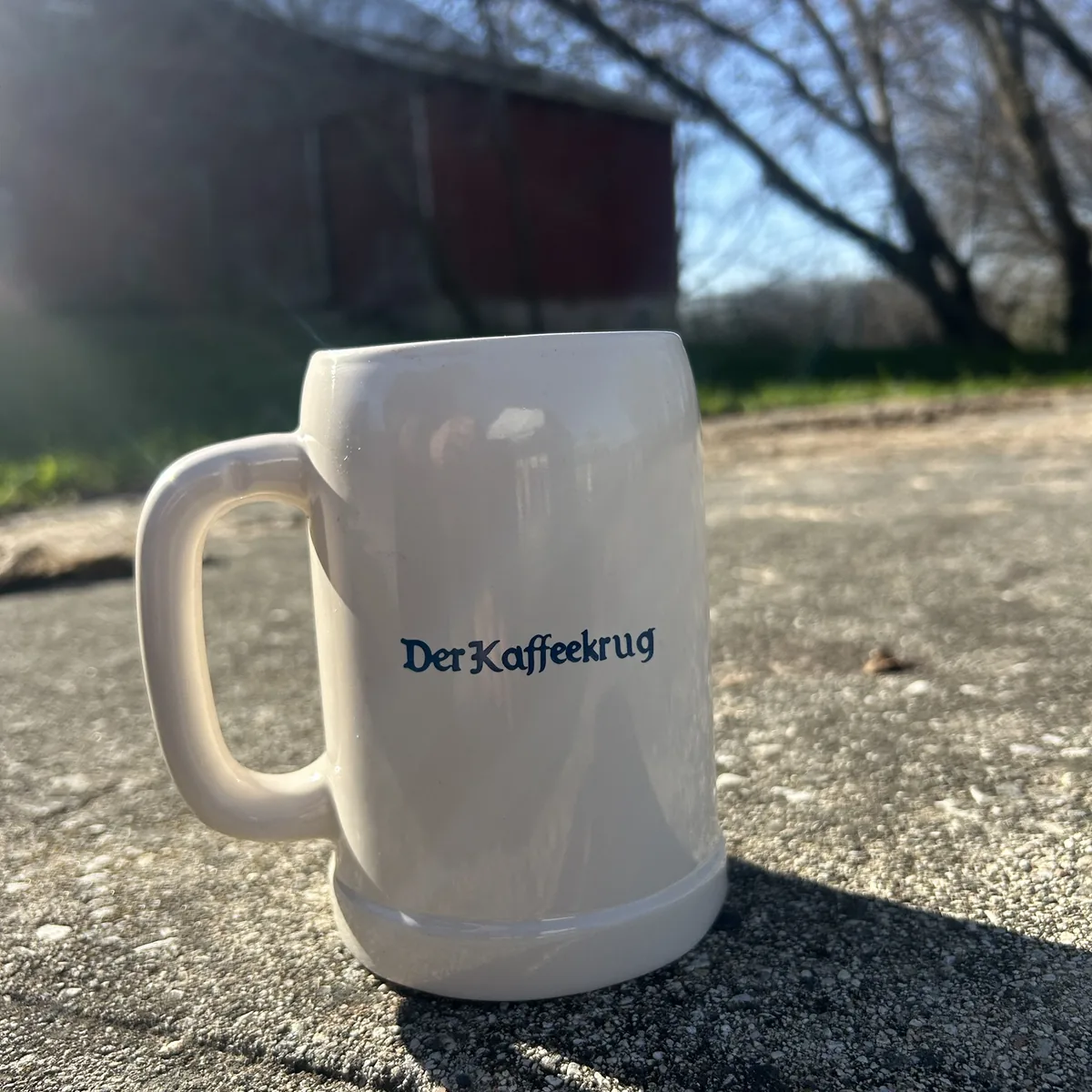
Kaffeekrug is German for coffee mug, and Der Kaffeekrug is the Der Hoffskeller stein. It has the beer hall shape and colors: a grey-white body, our crest in blue on the front with a crown on top, with the barn and the farm animals inside it, and Der Kaffeekrug written on the back.
It holds 24 oz, about twice a standard 12 oz coffee mug, so one fill lasts the morning. It stands 5.5 in tall and 3.8 in across, with a handle big enough for a full grip. And it is still a beer stein: fill it with coffee in the morning and beer in the evening.
| Beer hall Maßkrug | Der Kaffeekrug | Standard coffee mug | |
|---|---|---|---|
| Holds | 1 liter (about 34 oz) | 24 oz | About 12 oz |
| Made for | Beer | Coffee in the morning, beer in the evening | Coffee |
| Shape | Straight sides, heavy base | Straight sides, heavy base | Varies |
| Lid | No | No | No |
Why a stein makes a good coffee mug
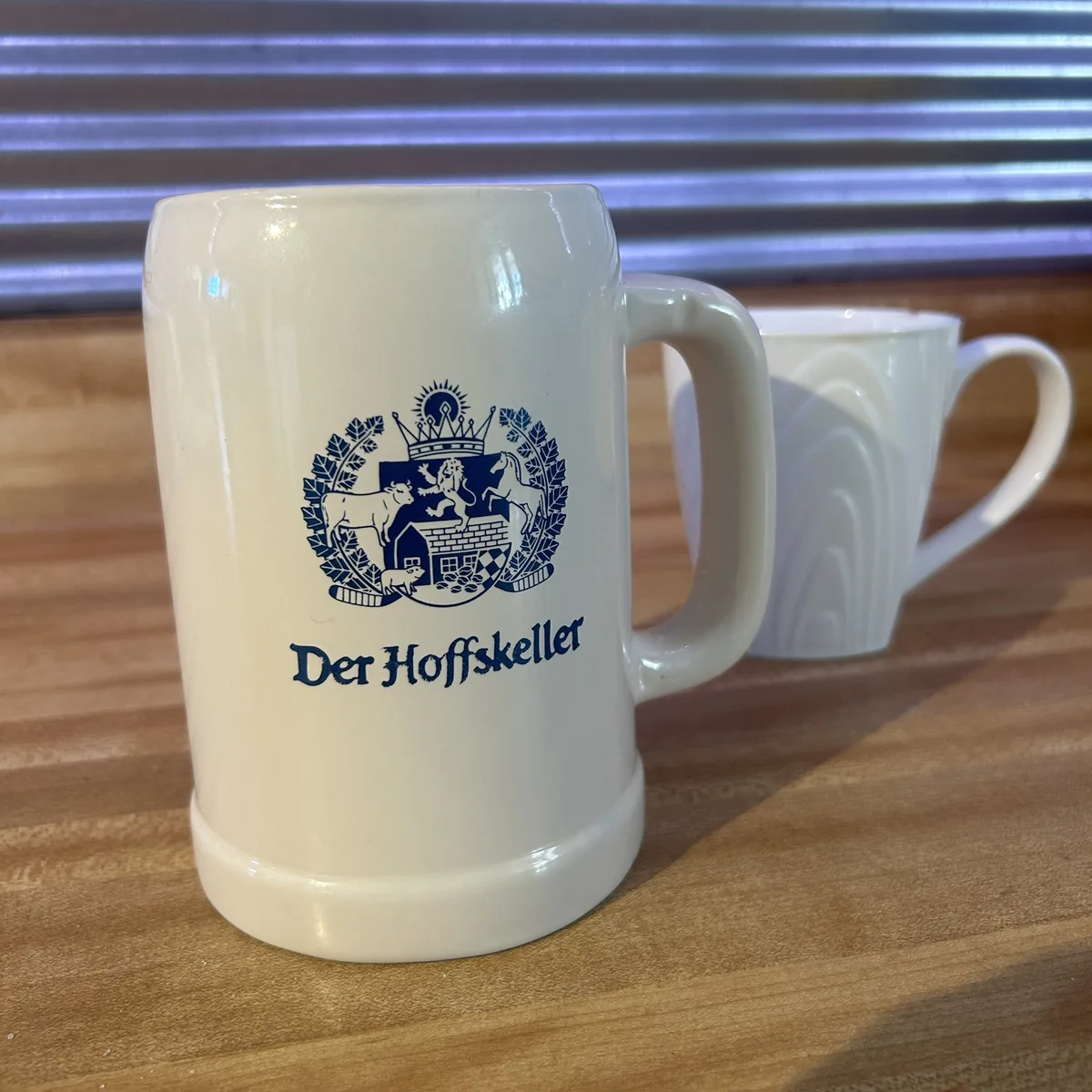
- One fill lasts. 24 oz is two ordinary mugs, so there are fewer trips to the pot.
- A grip that works. A beer hall handle takes your whole hand, even with gloves on in a Wisconsin winter.
- Hard to tip. Straight sides and a heavy base sit steady on a desk, a dashboard tray or a workbench.
- It looks like something. A stein on the table starts a conversation the way a plain mug never does.
A gift for German heritage, coffee drinkers and beer drinkers
Der Kaffeekrug is $55 with free shipping, and every one ships in its own box, separately from any coffee. It suits anyone with German roots, anyone who has been to a Bavarian beer hall or an Oktoberfest, and anyone whose coffee mug is never big enough. Pair it with a jar of Der Hoffskeller Coffee, roasted in cast iron in our barn, or let them choose with a gift card.
Der Kaffeekrug is the Der Hoffskeller stein. We are not affiliated with the Hofbräuhaus or any brewery; the history above is told for the stein's sake. Read more about our coffee: cast-iron roasted coffee, our German Norwegian roast and a history of coffee.
Questions about stein coffee mugs
Can you drink coffee out of a beer stein?
Yes. A ceramic stein is just a big, heavy mug with a handle, and it works for coffee the same way it works for beer. Der Kaffeekrug is made for both: coffee in the morning, beer in the evening.
Why is a beer stein called a stein?
In English, stein comes from the German Steinkrug, a jug made of Steinzeug, or stoneware. In Germany people usually say Krug or Bierkrug, and a one-liter beer hall mug is a Maßkrug.
Why do some German beer steins have lids?
The story usually told is that hinged pewter lids spread after the plague years and outbreaks of flies, when towns wanted food and drink kept covered. Historians debate how much of that is legend, but lids became a mark of the classic decorative stein. The plain beer hall mug never had one.
How big is a German beer stein?
The beer hall Maßkrug holds one liter, about 34 oz. Half-liter steins hold about 17 oz. Der Kaffeekrug holds 24 oz, about twice a standard coffee mug.
What is a Ratskeller?
A Ratskeller (often spelled rathskeller in America) is the cellar under a German Rathaus, or town hall, used as a tavern or wine cellar. Bremen's dates to 1405. American colleges and towns borrowed the name for German-style cellar taverns.
Is Der Kaffeekrug a Hofbräuhaus stein?
No. Der Kaffeekrug is the Der Hoffskeller stein, with our own crest, and we are not affiliated with the Hofbräuhaus. It follows the same classic Bavarian beer hall look.