
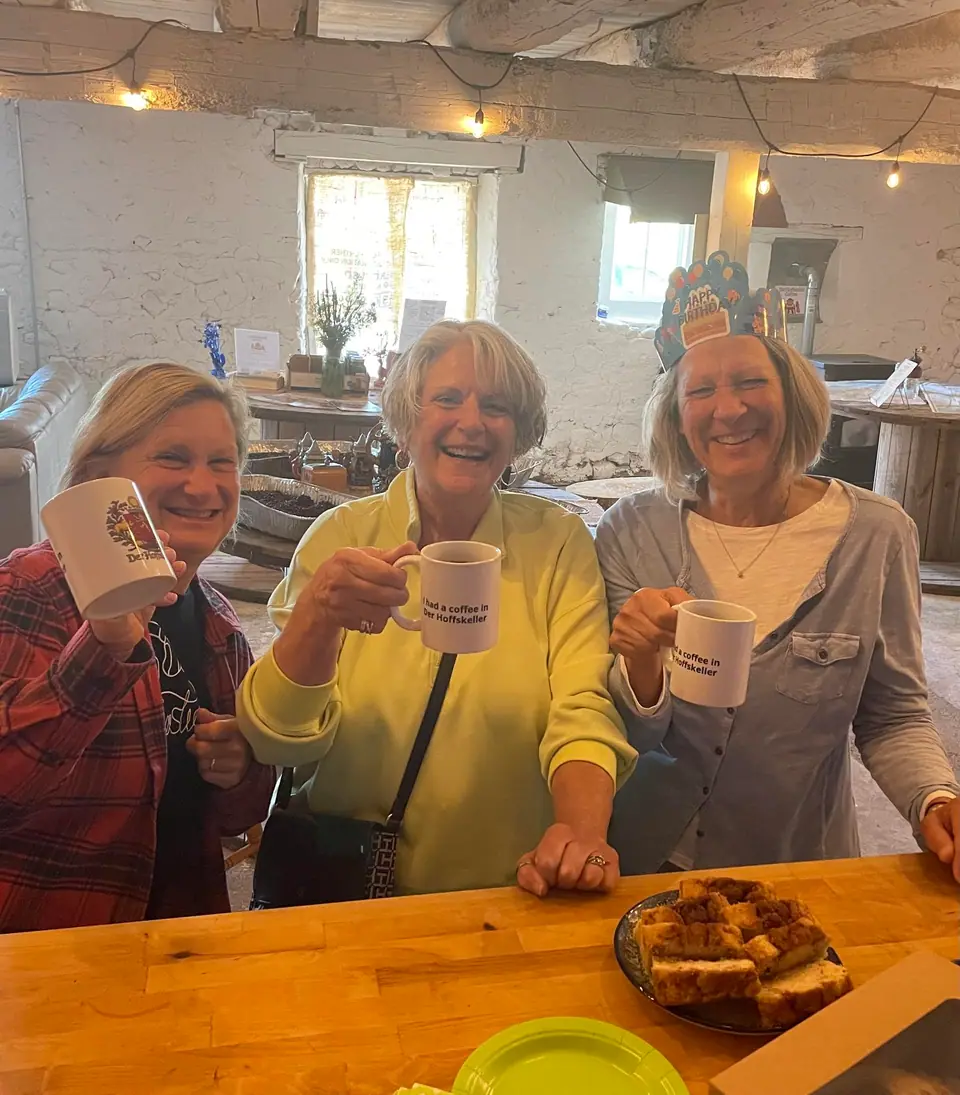
Kaffee und Kuchen: What It Means and How to Host a German Afternoon Coffee
Kaffee und Kuchen means "coffee and cake" in German: an unhurried afternoon break, usually between 3 and 4 p.m., with a pot of coffee and a slice of cake, most often on weekends and when guests come over. A Kaffeeklatsch is the gathering, coffee with conversation. To host one, set out one good cake, brew filter coffee by the pot and plan on about two cups per guest.
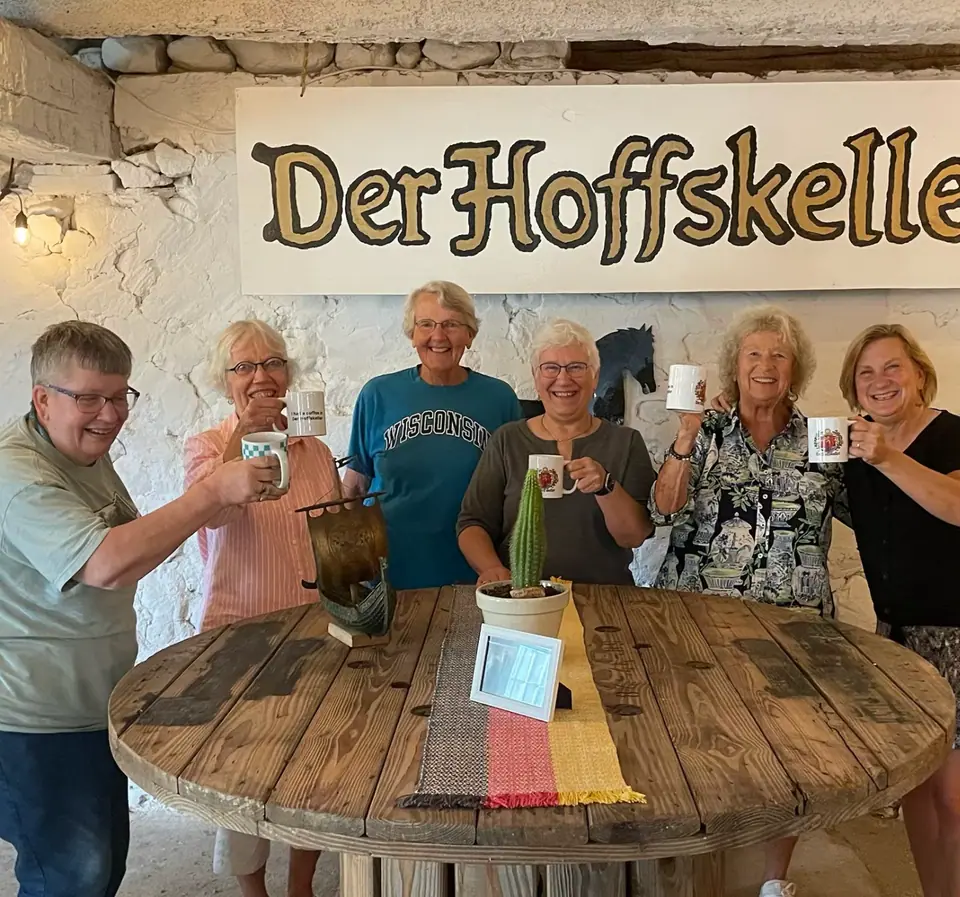
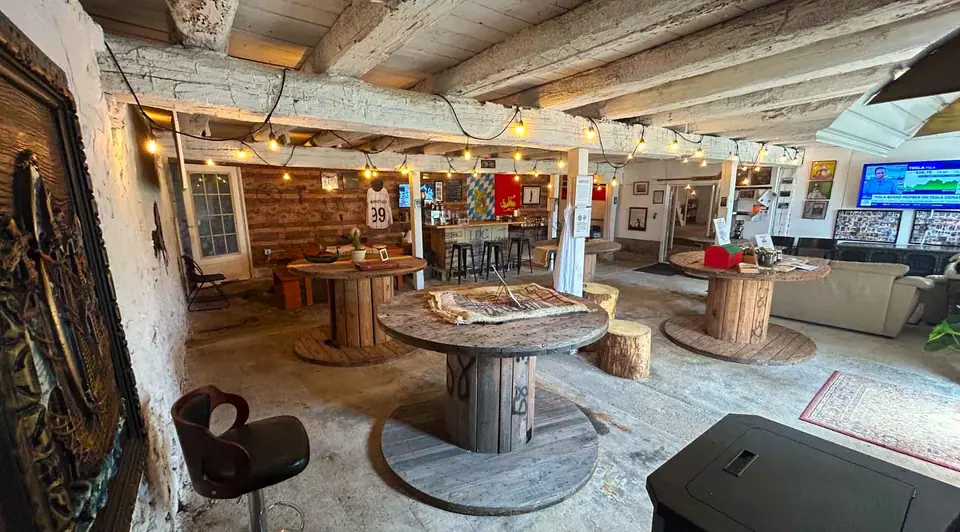
We are a family coffee roaster in a barn in Cedarburg, Wisconsin, with German and Norwegian roots. This guide covers what the custom means, when Germans keep it, what to bake and how much coffee to brew.
What Kaffee und Kuchen means
Kaffee is coffee and Kuchen is cake, so the phrase is literally "coffee and cake," as The Local, an English-language news site in Germany, puts it. In practice it is more than a snack: a sit-down pause in the middle of the afternoon, with a set table, real cups and nobody in a hurry. Our post on what makes German coffee German calls it the German answer to British afternoon tea.
The custom is old. The Local traces it to the 17th century, when coffee was first imported to Germany and only the aristocracy indulged. By the 19th century it had become more accessible.
When and how Germans do it
The usual hour is mid-afternoon, typically between 3 and 4 p.m., according to The Local. During the work week many people make do with a quick treat from a shop. The long version waits for the weekend, with large pots of coffee. Sunday afternoon is the classic time, as an essay in the European magazine Cafébabel on German "coffee-and-cake Sundays" described it.
It happens at home, where the host gets to show off a cake baked by hand, or in a Konditorei, the cake shops found all over Germany. Either way it is about the company: coworkers, friends or family around one table. To host one:
- Invite people for about 3 o'clock. The hour tells guests this is coffee and cake, not a meal.
- Bake or buy one good cake, two for a big group, and slice it before people sit down.
- Set the table: plates, forks, cups and saucers, cream and sugar, and whipped cream if your cake wants it.
- Brew just before guests arrive and pour the coffee into a thermal carafe instead of leaving it on a warming plate, which keeps heating it and dulls the flavor.
- Plan for a second pot. A good afternoon runs an hour or two.
Kaffeeklatsch
A Kaffeeklatsch is the conversation part. The German word joins Kaffee, coffee, with Klatsch, chatter. Dictionary.com dates the English "coffee klatsch" to 1880 to 1885 and defines it as a social gathering for informal conversation at which coffee is served. The Local describes a Kaffeeklatsch as catching up over the two delights, the coffee and the cake.
Kaffee und Kuchen names what is on the table; a Kaffeeklatsch names what happens around it.
What to bake
German cakes change by region and season, so there is no single right answer. These are classics The Local names, with what it says about each:
| Cake | In English | Where or when | What it is |
|---|---|---|---|
| Schwarzwälder Kirschtorte | Black Forest cherry cake | The Black Forest | Layers of whipped cream and chocolate sponge with cherry liqueur, topped with chocolate shavings and cherries |
| Prinzregententorte | Prince Regent torte | Bavaria | Seven layers of sponge and chocolate buttercream, finished with apricot jam, dark chocolate and cream |
| Frankfurter Kranz | Frankfurt crown cake | Frankfurt | A Bundt cake layered with jam and buttercream, sprinkled with caramelized nuts |
| Stollen | Stollen | Christmas, from Saxony | A fruit bread of nuts, spices and dried fruit, coated with powdered sugar |
The Local also names Bienenstich (bee sting cake), Erdbeertorte (strawberry torte) and Baumkuchen (tree cake) among the cakes to expect behind a cake shop's glass counter. You do not need a masterpiece, though. A plain cake you bake well, on a good plate, is fully in the spirit of the thing.
The coffee
The everyday German cup is Filterkaffee, filter coffee made by the pot, which suits an afternoon of refills. The paper coffee filter itself is German, patented by Melitta Bentz in Dresden in 1908. The traditional cup is medium-dark, full-bodied and smooth enough to drink black.
Our starting rule is two level tablespoons of ground coffee for every six ounces of water. Assume each guest drinks two six-ounce cups (an estimate; some will want three):
| Guests | 6-oz cups | Water | Ground coffee (estimate) |
|---|---|---|---|
| 4 | 8 | 48 oz | 16 tbsp, about 80 g |
| 6 | 12 | 72 oz | 24 tbsp, about 120 g (one full 12-cup pot of 6-oz cups) |
| 8 | 16 | 96 oz | 32 tbsp, about 160 g |
| 12 | 24 | 144 oz | 48 tbsp, about 240 g (a little over half a pound) |
Estimates at about 5 grams per level tablespoon. Many coffee makers count a "cup" as 5 ounces, so check yours; our guide to how much coffee for 12 cups has a chart for every carafe, and the coffee to water ratio guide covers other brewers. For a church or club crowd, an urn is easier: see how much coffee for 100 people.
Kaffee und Kuchen in Wisconsin
Wisconsin was settled by Germans in great numbers. At the 1900 census, people born in Germany were about 47 percent of the state's foreign-born residents, with Norway second at about 12 percent (Census Bureau figures as transcribed by Stacker). Our history of Wisconsin immigration tells the longer story.
Our farm in Cedarburg was part of an early German settlement in the 1860s, our family came from both Germany and Norway, and the barn has been in the family since 1944. That mix is where our coffee's style comes from: Germans opt for a darker roast, while Norwegians prefer a lighter one. We roast in cast iron, in one roast that releases beans at different points, so each batch holds a spread of roast levels. Customers describe the result as smooth, bold and low in acid, and good black.
“I grew up drinking delicious German coffee and honestly haven't found anything as good here in the states...until now!”
Natasha B, Facebook, May 2026
“I lived in Germany for three years. I've been looking for a good German Coffee and Der Hoffskeller is the best.”
Brian H, verified buyer, January 2026
Missing a cup you remember? See coffee that tastes like it did in Germany.
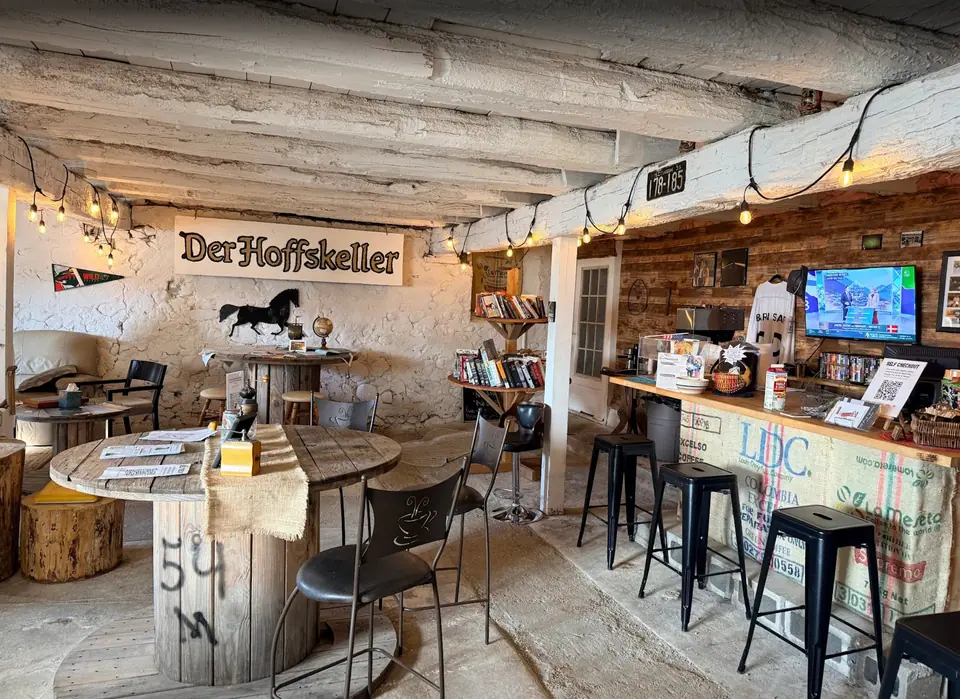
One honest note: we are a roaster, not a bakery. Once in a while a homemade cake has turned up at the barn, as Janet K remembers:
“Brought my husband on Friday we enjoyed cup of your fresh roasted delicious tasting coffee and enjoyed some yummy homemade blueberry coffee cake.”
Janet K, Facebook, November 2025
Most days, though, it is just the coffee, as a Google reviewer put it plainly:
“They give a free cup of coffee and have coffee beans or ground coffee for sale but no snacks or pastries.”
Ted P, Google, August 2026
The barn is at 1040 Sherman Road in Cedarburg, open every day from 9 to 5, and the first cup is on us. The Kuchen is up to you.
Coffee for your table
If you would like ours on the table, it is a medium-dark coffee meant for drinking by the potful. The Big Hoff jar of ground coffee is a half-gallon glass Mason jar holding 30.2 ounces for $42. The Big Hoff Bag, 2 lb ground, is $34. Either holds enough for about seven afternoons with six guests at the rates above (estimate). Ground is one medium-fine grind that works for every brew method, espresso included. If you grind at home, order whole bean: the jar or the 2 lb bag.
Shipping is free on orders of $50 or more, so a single jar or bag pays postage at checkout. We ship by USPS to US addresses only.
Where something else suits you better: we make one coffee, 100% Colombian Supremo Arabica, with no decaf and no flavors. If some guests skip caffeine in the afternoon, keep a decaf from another roaster on hand for them. If your crowd prefers a light, fruity roast, a lighter coffee from another roaster will suit them better than ours.
Kaffee und Kuchen Questions
What time is Kaffee und Kuchen?
Usually mid-afternoon, typically between 3 and 4 p.m., according to The Local.
Do Germans have Kaffee und Kuchen every day?
Not usually in the full form. On workdays many people settle for a quick treat from a shop. The long version, with large pots of coffee and a set table, is mostly a weekend custom, Sunday afternoon especially, and it comes out when family or friends visit.
What is the difference between a Kaffeeklatsch and Kaffee und Kuchen?
Kaffee und Kuchen is the coffee and cake; a Kaffeeklatsch is the gathering to talk over them. Dictionary.com defines a coffee klatsch as a social gathering for informal conversation at which coffee is served. In practice one usually becomes the other.
What coffee do Germans drink with cake?
Most often Filterkaffee, filter coffee made by the pot, traditionally a medium-dark roast smooth enough to drink black. Our post on what makes German coffee German explains the style and its history.
How much coffee do I need for 12 guests?
About 48 level tablespoons (roughly 240 grams) for 24 six-ounce cups, at two cups each and two tablespoons per six ounces of water. That is an estimate; brew a second pot if the table lingers.
Put the coffee on at three
Kaffee und Kuchen asks very little: one cake, a good pot of coffee and an afternoon with nowhere else to be. For brewing, buying and more of the old traditions, browse our coffee guides. Guten Appetit.