

Is Dark Roast Less Acidic? Coffee Acidity, Plainly Explained
Usually, yes: dark roast coffee tastes less acidic than light roast. The natural acids in the bean, chiefly chlorogenic acids, break down as the roast develops, so dark and medium-dark roasts taste rounder and less bright. "Low acid" is not a defined label, though, and we make no pH claims. This guide is about flavor, not about how coffee sits with your stomach.
We roast one coffee, a medium-dark 100% Colombian Supremo Arabica, in cast iron on our family farm in Cedarburg, Wisconsin. Here is what we know about acidity from the roaster's side: what acidity in coffee is, what roasting, origin and brewing do to it, and when a different coffee will suit you better than ours.
Two meanings of "acidic"
When coffee people call a coffee acidic, they usually mean a taste: a bright, tangy snap, the kind you notice in a light roast that tastes of citrus or berries. Roasters call it brightness, and plenty of people love it. When most other people call coffee acidic, they mean something else: how it sits with them an hour later.
We can speak to the first meaning, because roast level, origin and brewing are what change it. The second meaning is a question for a doctor, not a coffee roaster, and nothing in this guide is medical advice. If your doctor has told you to cut back on coffee or to stop, follow your doctor.
What roasting does to acidity
Green coffee carries natural acids. As our FAQ puts it, coffee's acidity comes from "Natural acids in the bean, chiefly chlorogenic acids, which break down as the roast develops." The further a roast goes, the more of that brightness gives way to caramel, chocolate and the flavor of the roast itself. That is why roast level is one of the biggest levers on how acidic a coffee tastes.
| Roast level | How the acidity tastes | What you taste instead |
|---|---|---|
| Light | High: bright and tangy | Origin flavors up front, often fruit |
| Medium | Moderate | Milk chocolate and a silkier body |
| Medium-dark | Moderate to low: much of the brightness rounded off | A roasty tone and semisweet chocolate |
| Dark | Low | The roast itself: bold, smoky, bittersweet |
Sources: the Complete Home Barista roast level guide lists light roasts as high in acidity, medium as moderate and dark as low. Equator Coffees describes medium-dark as "a distinct roasty tone in the cup and semisweet chocolate flavors." Roast names are not standardized, so one roaster's medium-dark can be another's dark.
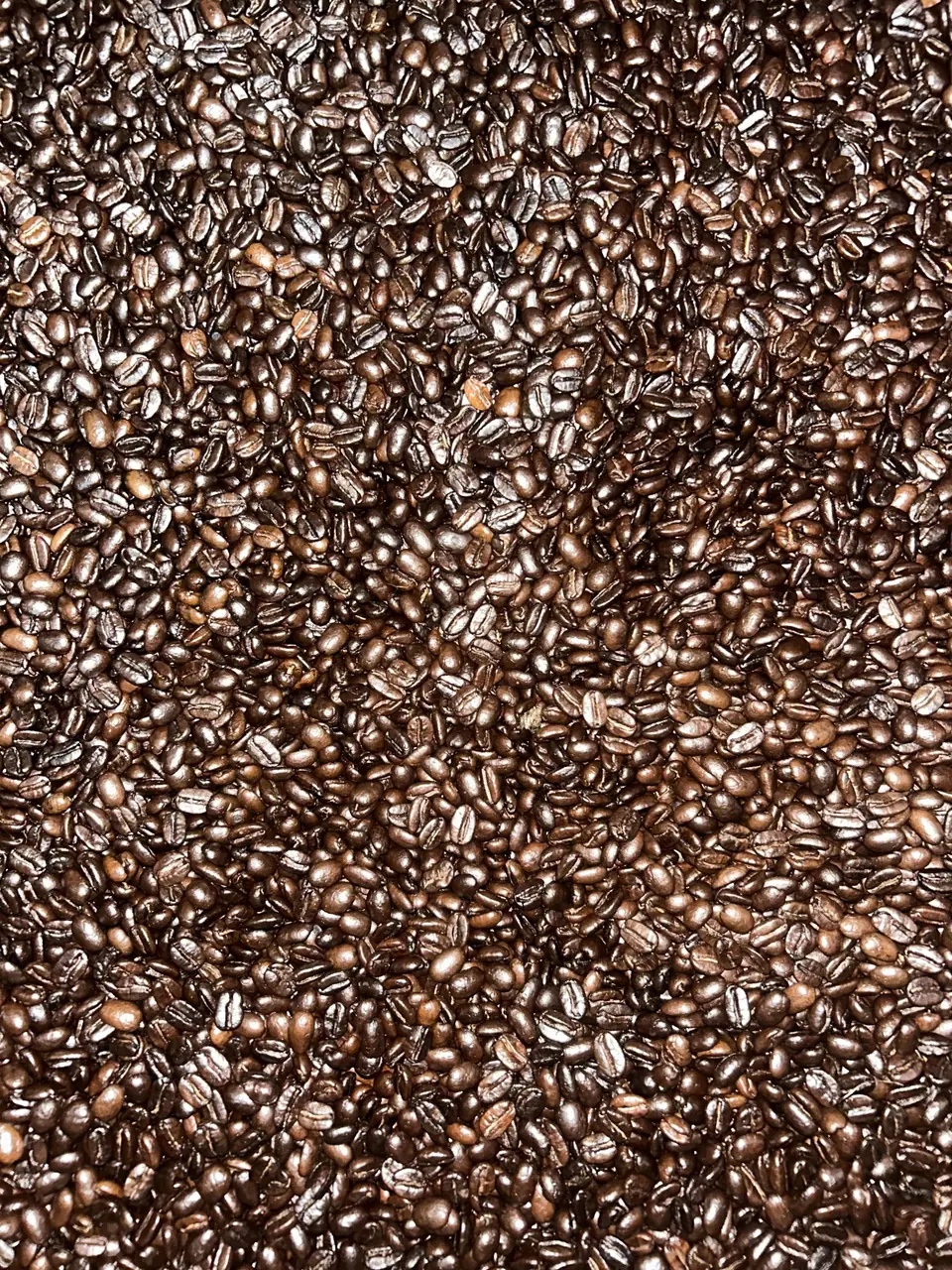
A roaster's note: in our cast iron drum, the beans do not all finish at the same moment. As our family story puts it, "By the time the first beans reach the second crack ... others are still a few shades lighter." Each batch holds a spread of roast levels. That is what we mean by German Norwegian style: Germans opt for a darker roast, Norwegians for a lighter one, and our one roast carries both. The result sits between medium and dark, full in body without tasting scorched.
Origin and process
Where a coffee grows sets how much brightness there is to start with. Colombia's favorite method is washed processing: the cherry is pulped and the beans soak in water tanks to strip off the rest of the fruit, which, as one guide to Colombian coffee puts it, "results in a clean, bright cup." Even inside Colombia the range is wide. The same guide lists the acidity of Nariño coffee as "very high" and Antioquia's as "medium."
So a washed Colombian roasted light can taste quite bright, and the same bean roasted medium-dark tastes rounder and more balanced. Supremo, the grade of the beans we buy, does not change that. It is Colombia's grade for the largest beans by screen size, a sort by size rather than a flavor. Origin sets the starting point, and roast level decides how much of that brightness reaches your cup. More on the flavor itself in what Colombian coffee tastes like.
Brewing and acidity
How you brew can make the same coffee taste brighter or softer, or simply harsh. These are the things that matter most:
- Cold brew tastes smoother. Our FAQ says it plainly: "Cold brew is smoother and less acidic." Our method is about one cup of ground coffee to four cups of cold water, steeped in the refrigerator for twelve to sixteen hours, then strained and diluted to taste. More in the best coffee for cold brew.
- Use water just off the boil. Around 200 degrees Fahrenheit. Boiling water poured straight onto the grounds pulls out harsher flavors.
- Take it off the hot plate. Coffee left on a burner keeps cooking, and the flavor drops off noticeably after about thirty minutes. Brew a smaller pot or move it to a thermal carafe.
- Brew to the right strength. Start with two tablespoons per six ounces of water and adjust from there. If a cup tastes harsh or bitter rather than bright, the fix is usually in the brewing. See why coffee tastes bitter.
Is low acid coffee real?
Coffees really do differ in how acidic they taste, so in that sense, yes. But "low acid" on a bag is a seller's description, not a grade, and no government test is required to print it. Sellers who use the words mean different things. Some steam or otherwise treat the beans, some use special roasting methods, some point to where the coffee grew, and some send samples to a lab. When you see the words, it is fair to ask what exactly the seller did.
Here is our answer. We do not treat the coffee chemically to lower acidity, and we make no pH claim. We roast one bean medium-dark, slowly and evenly, in cast iron. Customers describe the result as smooth and low in acid, and good black. You can read their own words in our collections of smooth, low acid coffee reviews and low acid coffee reviews, and in our guide to coffee you can drink black.
What our customers say
“I have acid reflux; this did not affect me. It's smooth. Rich. Incredible!!!”
Linda L, Facebook, September 2026
We cannot make a medical claim. That is one customer's experience, in her own words, and yours may be different.
“Medium-Dark roast, smooth, low acidity.”
Annette B, Facebook, July 2026
“Smooth, not acidic-it’s perfect!”
Kathy, verified buyer, October 2025
When another coffee will suit you better
Our coffee is not for everyone, and we would rather say so. If you love a bright, fruity cup, a light roast from a specialty roaster will give you exactly the acidity ours rounds off. If caffeine is your concern rather than acidity, look for a good decaf; we do not make one. And if a doctor has told you to avoid coffee, no roast level changes that.
If what you want is a smooth, medium-dark cup you can drink black, ours is a good place to start. The Big Hoff Bag, 2 lb whole bean is $34 as a one-time order, and it also comes ground. The Little Hoff, a half pound for $15, is the smallest way to try it. Ground comes in one medium-fine grind that works for every brew method, espresso included; if you grind at home, order whole bean. We make one coffee: no decaf, no flavors, no light roast. We ship by USPS to US addresses only, free on orders of $50 or more.
Coffee acidity questions
Is medium-dark less acidic than medium?
In taste, usually yes. The further a roast develops, the more of the bean's natural acids break down, so a medium-dark tastes softer than a medium and a little brighter than a true dark roast. Roast names are not standardized, so compare by taste rather than by the word on the label.
Does cold brew have less acid?
It tastes smoother and less acidic than hot coffee brewed from the same beans, and our FAQ says the same. We make no pH claims about it. Our method is about one cup of ground coffee to four cups of cold water, steeped twelve to sixteen hours in the refrigerator, then strained and diluted to taste.
Will your coffee upset my stomach?
We cannot make a medical claim, and we cannot tell you how any coffee will sit with you. Customers describe ours as smooth and low in acid, but that describes flavor, not digestion. If your doctor has told you to limit or avoid coffee, follow your doctor.
Is your coffee treated to lower acid?
No. We do not treat the coffee chemically to lower acidity. It is 100% Colombian Supremo Arabica, roasted medium-dark in cast iron, with nothing added.
Taste first, then decide
Origin sets how much brightness a coffee starts with, roast level decides how much of it reaches your cup, and brewing does the rest. If you want to go deeper on roast levels, read what medium-dark roast is, or browse more coffee guides from the barn. Prost.