Der Hoffskeller’s Signature German Norwegian Blend
At Der Hoffskeller, our signature offering isn’t just a recipe—it is a bridge between two distinct historical coffee cultures. When you visit our 100-plus-year-old family barn in Cedarburg, Wisconsin, you are tasting a method that dates back to the very origins of European coffeehouse culture.
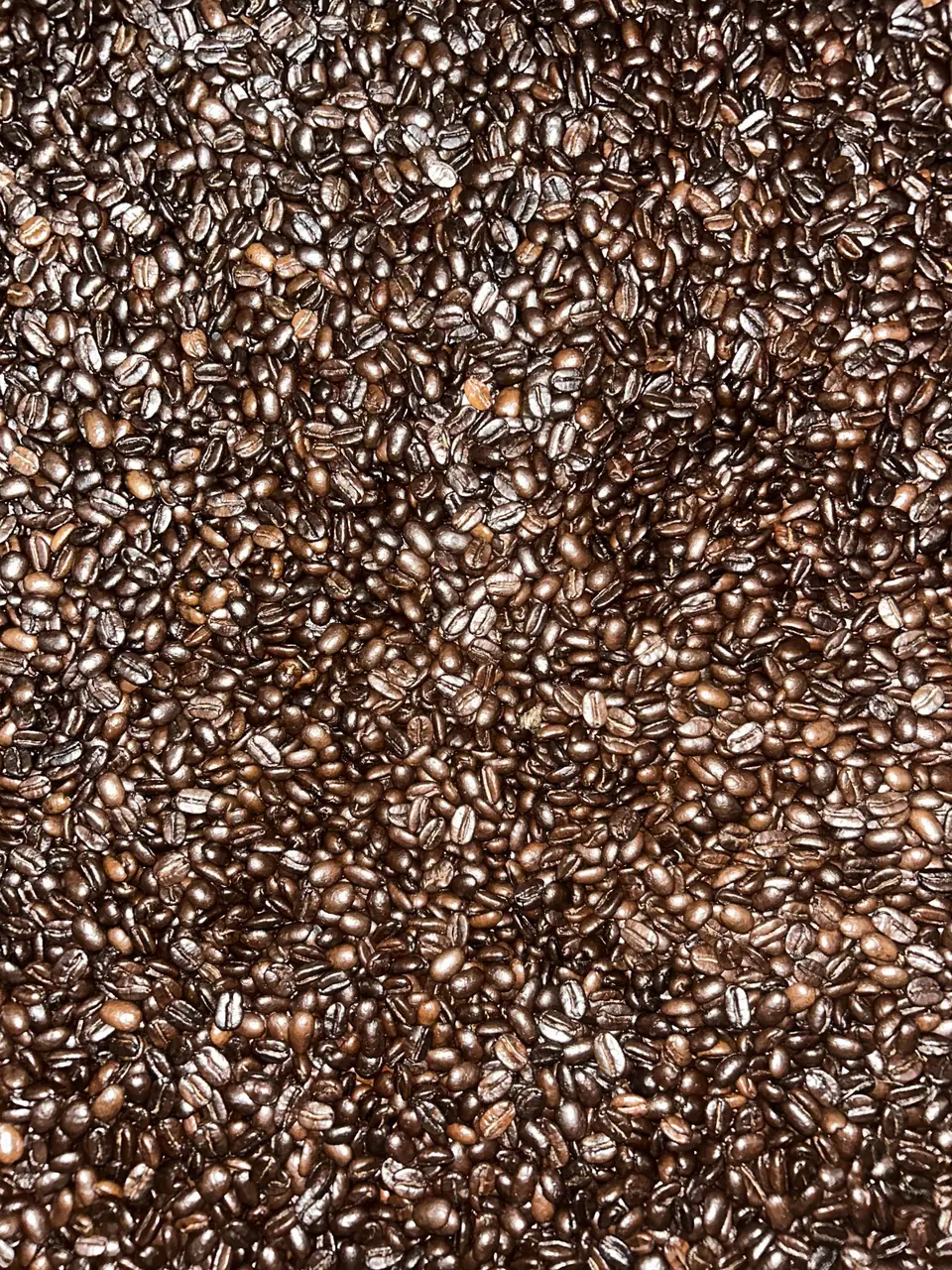
The name of our coffee, the German Norwegian blend, refers to a unique combination of roast levels. Historically, Germans have traditionally preferred a robust, darker roast, while a typical Norwegian roast is much lighter. Our German Norwegian blend contains an entire spectrum of roast levels from that dark German roast to the lighter Norwegian levels.
To understand why this creates such a phenomenal cup of coffee, we have to look back at the history of how these two distinct cultures embraced the coffee bean.
The German Tradition: Dark, Rich, and Resilient
Coffee first made its way to German port cities like Bremen and Hamburg in the late 1670s. By the 18th century, it had become a cultural phenomenon, deeply intertwined with the Enlightenment. Intellectuals and citizens alike gathered in Kaffeehäuser to discuss politics and philosophy over steaming cups of dark, rich coffee.
The traditional German roasting method favored a dark profile. Roasting was often done at home in small batches over an open fire or hot coals using cast iron pans and cylinders. The goal was to develop a deeply caramelized, robust, and bold flavor. Coffee became so popular in Germany that in the late 1700s, Frederick the Great famously tried to restrict its consumption to the elite, even deploying uniformed Kaffeeschnüffler (Coffee Sniffers) to walk the streets and catch citizens illegally roasting beans. The people’s love for dark, hearty coffee prevailed, cementing the dark roast as a staple of German culture.
The Norwegian Tradition: Light, Pure, and Unmasked
Further north, a very different coffee culture was brewing. Norway adopted coffee a bit later, but by the mid-19th century, they were consuming it at astounding rates. The Norwegian approach to roasting diverged significantly from the rest of Europe, leading to what the specialty coffee world now reveres as the “Nordic Light Roast.”
This lighter profile was born out of a unique historical advantage: access to exceptionally high-quality beans. Because of favorable maritime trade agreements in the 1800s—often trading Norwegian fish for South American coffee—Norway imported incredibly pure, high-grade green coffee. Because the raw beans were of such high quality, roasters didn’t need to roast them dark to hide defects or mask stale flavors. Instead, they roasted the beans very lightly. This brief roasting time preserved the bean’s natural complexity, resulting in a bright, clean cup that honored the true characteristics of the coffee fruit.
Bridging the Gap in Cast Iron
We exclusively use top-quality Colombian Supremo Arabica coffee beans, which have the natural quality required for a great Norwegian light roast, but the structural integrity to withstand a deep German dark roast.
We roast our coffee in cast iron, honoring the way coffee was prepared in old Europe and early America. The cast iron provides a uniquely conductive environment that allows us to achieve our signature style.
The Perfect Daily Coffee
By retaining more of the coffee bean skin (which adds historical authenticity and flavor) and utilizing our cast-iron method, we achieve a spectrum of flavors all within the same batch.
The resulting medium-dark profile has a classic, full-bodied flavor, great for a daily coffee! Because the lighter beans maintain the coffee’s natural smoothness and the darker beans provide a rich, bold foundation, the final cup is incredibly smooth, strong, and completely devoid of bitter or acidic aftertastes.
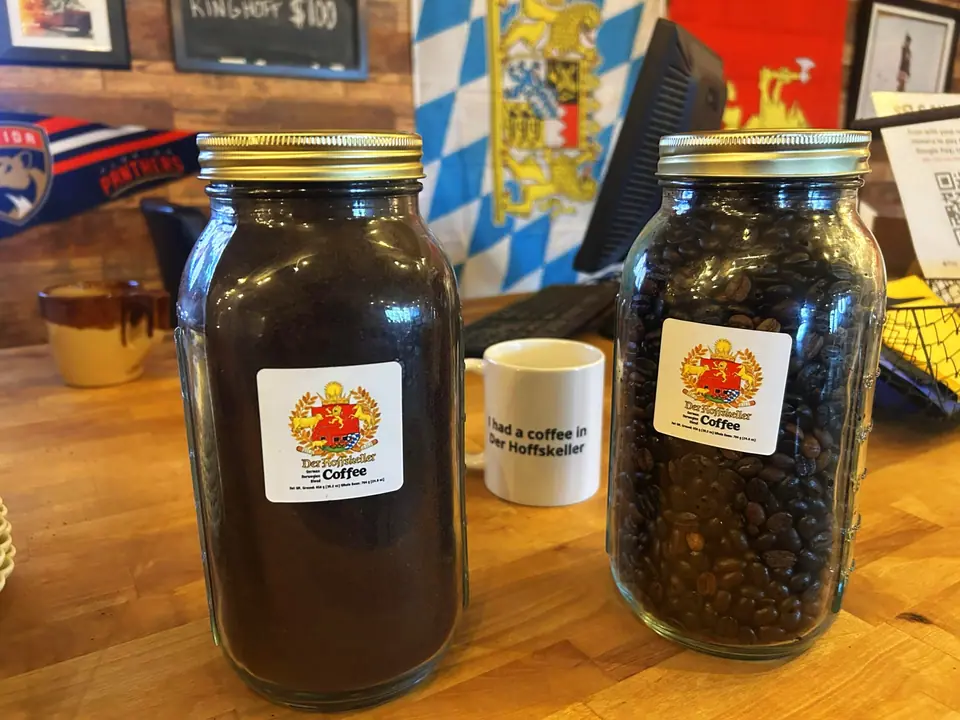
Sealed fresh in our signature glass Mason jars (bags available too)—Der Hoffskeller’s German Norwegian blend isn’t just coffee. It is a taste of history, carefully roasted in a Wisconsin barn, ready to be enjoyed just as it was centuries ago.