
Scandinavian Egg Coffee: How to Make the Church Basement Classic
To make Scandinavian egg coffee, mash an egg, shell and all, into about a cup of ground coffee, stir it into 8 cups of boiling water and let it bubble 3 to 4 minutes. Off the heat, add a splash of cold water, let the grounds sink 7 to 10 minutes, then pour off a clear, amber cup. It is a Scandinavian-American Lutheran church tradition, not Vietnamese egg coffee.
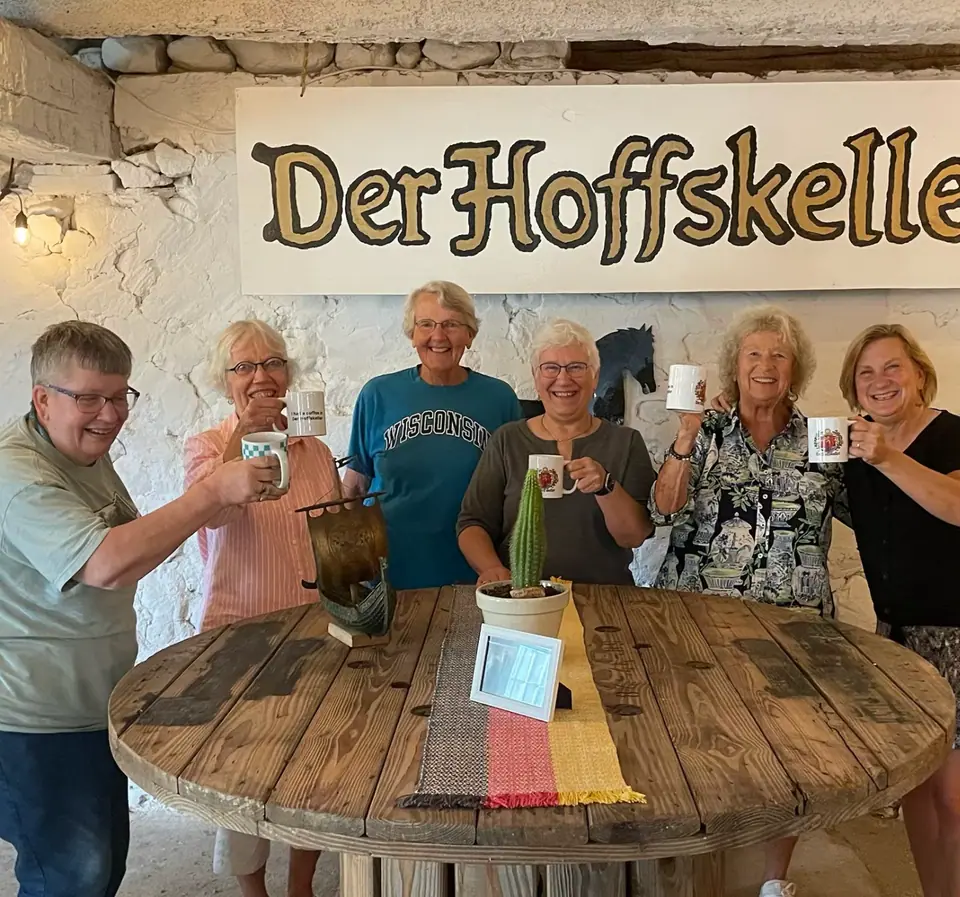
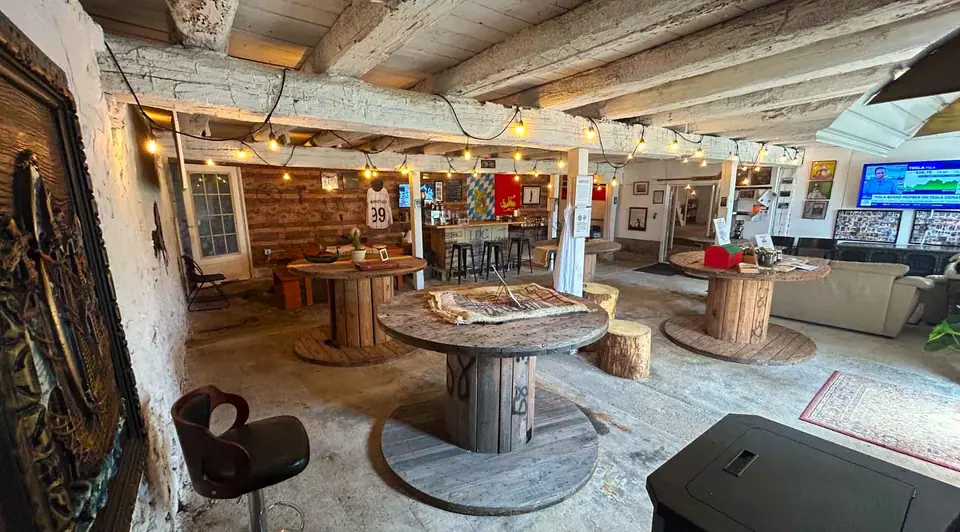
We roast coffee in our family's barn in Cedarburg, Wisconsin, and our family came from Germany and Norway. Egg coffee belongs to the Scandinavian-American churches of the upper Midwest, not to us, but it is close to home.
What egg coffee is, and what it isn't
Egg coffee is boiled coffee made in an open pot. An egg, often with its crushed shell, is mashed into the grounds and dropped into boiling water. The egg cooks and gathers the grounds into a floating clump, cold water sinks it, and you pour a clean cup with no filter. Atlas Obscura describes the result as translucent amber, smooth and velvety. It also goes by Swedish egg coffee, Norwegian egg coffee, Lutheran coffee and church basement coffee. It is not Vietnamese egg coffee, which is sweet and topped with whipped yolk.
From church basements to the State Fair
Swedish and Norwegian immigrants arriving from the mid-1800s on brought boiled coffee to Minnesota, the Dakotas and Wisconsin. In 1900, Wisconsin alone counted 61,575 residents born in Norway and 26,196 born in Sweden (see our history of Wisconsin immigration). Farm kitchens had no paper filters, so boiled coffee came out gritty, and coffee was a luxury that farmers stretched by reusing the grounds, Tasting Table notes. The egg cleared the pot and smoothed out the cup. In Norway, people also used dried fish skin, which Norwegians call klareskinn, "clearing skin" (Norway's own coffee habits are in how Norwegians make coffee). Egg coffee faded once percolators and drip machines reached home kitchens, and in Scandinavia itself it has been out of fashion for almost a century, a Danish coffee expert told America's Test Kitchen.
It held on in church basements, at funerals and gatherings, and few places serve it regularly now. The best known is the Salem Lutheran Church dining hall at the Minnesota State Fair, a fixture since the late 1940s (accounts give 1946, 1949 and 1950). Atlas Obscura reports the hall pours about 2,000 cups, roughly 50 forty-cup pots, by early afternoon on each of the fair's 12 days.

Recipe for a stovetop pot
Published recipes differ in strength. For comparison, our FAQ suggests two tablespoons per six ounces of water for regular coffee.
| Recipe | Water | Ground coffee | Egg | Tablespoons per 6 oz (estimate) |
|---|---|---|---|---|
| Home pot, 8 cups (Talk About Coffee) | 8 cups (64 oz) | 1 cup, about 3 oz | 1 large egg plus its crushed shell | About 1½ |
| Church pot, 40 cups (Atlas Obscura) | A full 40-cup pot | 2 cups, about 6 oz | 1 egg, shell and all | About 1 |
| Salem's 12-cup percolator pot (Atlas Obscura) | A 12-cup pot, basket removed | 3 to 4 tablespoons | Part of 1 egg, whipped with water | Under ½ |
Our estimates assume 16 tablespoons to a cup, about 3 ounces in a level cup of ground coffee, and percolator and urn "cups" of 5 to 6 ounces. Egg coffee is traditionally mild, so start with the home pot and adjust.
- Boil the water. Bring 8 cups of water to a full boil in a roomy saucepan or enamel coffee pot, since it foams.
- Make the slurry. In a bowl, mash 1 cup of ground coffee with 1 egg and its crushed shell until it looks like damp potting soil. Stir in ½ cup of cold water.
- Brew. Pour the slurry into the boiling water, turn the heat down to a gentle bubble and let it go 3 to 4 minutes, until the foam settles.
- Settle. Take the pot off the heat, add about ½ cup of cold water, cover it and let it stand 7 to 10 minutes without stirring. The raft of egg and grounds sinks.
- Pour. Pour slowly into cups, or through a fine strainer if you want every cup perfectly clear.
For a stronger pot, add more grounds next time; boiling longer only draws out bitterness.
In a percolator or a 40-cup church pot
A stovetop percolator makes a fine egg coffee pot with the basket and stem taken out. Salem's own 12-cup recipe, shared with Atlas Obscura, works that way: whip the egg with a little water, wet 3 to 4 tablespoons of grounds with it, stir that into the boiling water, then settle and strain. For regular perked coffee, see the best coffee for a percolator.
For a crowd, Atlas Obscura gives the church method: mash an egg, shell and all, into 2 cups of ground coffee, bring a 40-cup pot of water to a rolling boil, turn the heat down slightly, add the grounds, boil 30 to 60 seconds, turn off the burner, add a cup of cold water to settle it, and pour it off into warming carafes. The Takeout describes Salem's fair brewer using two eggs and cutting the heat right away. At home, a large stockpot on the burner does the job, with thermal carafes to hold the coffee.
Why the egg?
The protein in the egg clings to the grounds as it cooks, forming a floating "raft" that the cold water sinks, leaving clear coffee above. Chefs clear soup into consommé the same way.
Many recipes also say the egg and shell make coffee less bitter and less acidic. America's Test Kitchen points to the alkaline calcium carbonate in the shell and cites a Cook's Illustrated test in which a rinsed eggshell made over-brewed coffee milder. The clearing you can see for yourself; the milder taste rests on tradition and a kitchen test.
A roaster's note: our roast keeps more of the bean's papery silverskin than many do, and in an open pot those light flakes float; the egg raft helps carry them down.
The coffee to use
Boiling is hard on coffee, so the usual choice is a smooth medium or medium-dark roast; very light roasts tend to taste thin and tangy when boiled. Church cooks made it with everyday coffee, and the egg mellows a coffee's sharper notes, so there is no need for expensive beans.
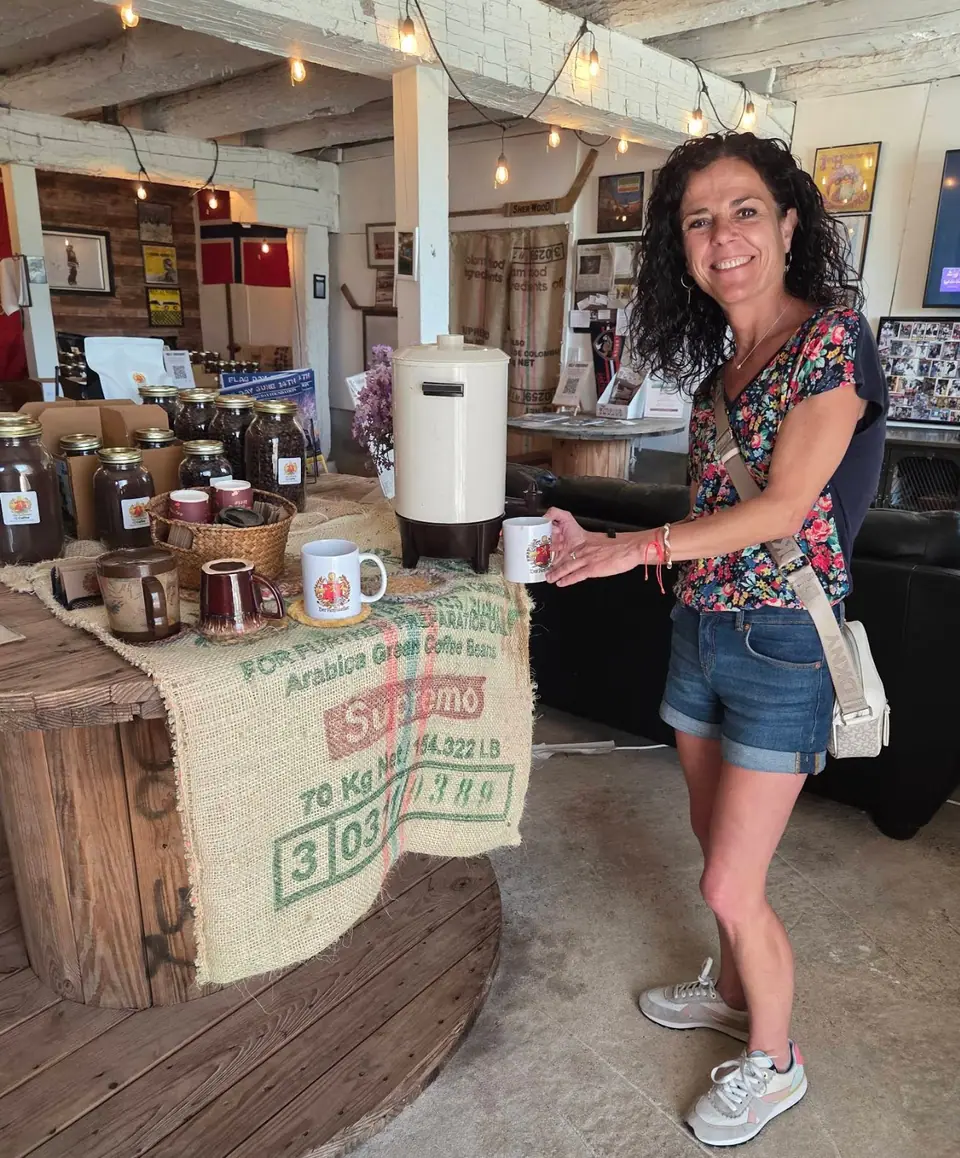
Ours is one good fit: 100% Colombian Supremo Arabica (Supremo is Colombia's grade for the largest beans by screen size), roasted medium-dark in the German Norwegian style in a cast iron drum roaster. One roast releases beans at different points, so each batch holds a spread of roast levels: Germans favor darker, Norwegians lighter, and ours holds some of each. Customers describe it as smooth, bold and low in acid, and good black. More on the German side in what makes German coffee German.
“The coffee reminds me of my parents brewing coffee everyday! I grew up in Minnesota with Swedish- German roots!”
Linda S, Facebook, September 2026
Our ground coffee is one medium-fine grind that works for every brew method, egg coffee included. If you grind at home, order whole bean.
- The Hoff, 1 lb ground, $25: about 5 home pots, roughly $4.70 each (estimate, 3 oz a pot).
- Big Hoff Bag, 2 lb ground, $34: about 10 to 11 home pots, roughly $3.20 each (estimate).
- King Hoff, 7 lb ground, $105: about 18 to 19 church pots at 6 oz each, roughly $5.60 a pot (estimate).
Shipping is free on orders of $50 or more, by USPS to US addresses. We make one coffee, with no decaf, flavors or light roast; if an evening supper needs a decaf pot, pick up a decaf you like for that one.
“We are enjoying our first order! We (both 50% German and he is 50% Norwegian) both LOVE IT!”
Cheryl M, Facebook, December 2025
“Superb! You guys have hit the ball out of the park. Reminds me of my grandmother and the coffee she made when I was a kid.”
Matthew, verified buyer, August 2026

Egg coffee questions
Does egg coffee taste like egg?
No. The egg sinks with the grounds, and you pour a clear, mild coffee. The writer at The Takeout found no egg flavor, only a whiff of cooking yolk at first.
Is it the same as Vietnamese egg coffee?
No. Vietnamese egg coffee is coffee topped with whipped egg yolk and condensed milk. The Scandinavian kind uses the egg only to clear the pot, and it stays behind with the grounds.
Why is it called church basement coffee?
Lutheran church kitchens kept brewing it by the big pot for funerals and gatherings long after home kitchens moved on to percolators and drip machines.
Can I make egg coffee in a drip coffee maker?
No. It is a boiled method. Use a saucepan, an enamel coffee pot or a stovetop percolator with the basket removed.
Do I have to use the shell?
No. America's Test Kitchen credits the shell with a mellower cup, but the St. Paul chef Atlas Obscura profiled leaves it out, as her grandmother did. If you use it, rinse and crush it.
How much coffee for a 40-cup church pot?
Atlas Obscura's church recipe uses 2 cups of ground coffee (about 6 ounces, our estimate) and one egg; Salem's fair brewer uses two eggs, The Takeout reports. To size a whole event, see how much coffee for 100 people.
Brew it the old way
Egg coffee takes a pot, an egg and about 20 minutes, and gives a clear, gentle cup that tastes like a church kitchen on a Sunday afternoon. Brew it with any medium or medium-dark coffee you like, and find more on our coffee guides page.