
How Norwegians Make Coffee: Kokekaffe, Filter Coffee and the Coffee Table
The most common way Norwegians make coffee today is in an electric drip machine: a full pot of filter coffee. Outdoors, on hikes and around a fire, many still make kokekaffe, coffee steeped in just-boiled water and poured off the grounds. Norway is among the biggest coffee drinkers in the world per person, and its specialty roasters are known for roasting light.
How much is a lot? A 2023 StoneX roundup of World Population Review figures puts Norway at 9.9 kilograms of coffee per person a year, second only to Finland. That is about 22 pounds. At our usual estimate of 35 eight-ounce cups per pound, it comes to roughly 760 cups a year for every person in the country, children included, or about two a day (our estimate). We are a Wisconsin family with German and Norwegian roots, not a Norwegian roaster, so this guide leans on Norwegian sources and adds what we know from roasting.
Kokekaffe step by step
Kokekaffe means "boiled coffee," but as it is usually made today the coffee itself is not boiled: you boil the water, take it off the heat, and steep the grounds in it, like a French press without the press. Tim Wendelboe, the Oslo roaster and former World Barista Champion, put it simply on CNN, as Sprudge reported: boil the water, put the coffee in, let it steep four minutes, then pour. The Norwegian travel company Fjord Tours describes the result as a light brew, a little fuller in the mouth, with a hint of fruit.
- Measure. A common Norwegian guideline is about 65 grams of coffee per liter of water, give or take 5 grams to taste.
- Boil the water in a pot or kettle, then take it off the heat.
- Add the coffee and stir so all the grounds get wet.
- Cover and steep 4 to 5 minutes.
- Settle it. Stir gently or press the floating grounds down with a spoon so they start to sink, then wait about a minute.
- Pour slowly into cups or a thermos, leaving the grounds and the last bit in the pot. Pour it all off even if you will not drink it now: coffee left on its grounds keeps extracting and turns bitter.
| Water | Coffee by weight (65 g per liter) | By our FAQ rule (2 tbsp per 6 oz) | Makes about (8 oz cups) |
|---|---|---|---|
| 1 liter (34 oz) | 65 g | about 11 tbsp | 4 |
| 1.5 liters (51 oz) | about 100 g | about 17 tbsp | 6 |
| 2 liters (68 oz) | 130 g | about 22 tbsp | 8 |
All figures are estimates, and the cup counts are before what the grounds soak up. At about 5 grams per level tablespoon, our FAQ rule comes out a little milder than 65 grams per liter, so add a tablespoon or two per liter for the Norwegian strength. A kitchen scale takes the guessing out.
Norwegian guides call for a fairly coarse grind, which settles easily. Our ground coffee is one medium-fine grind that works for every brew method, kokekaffe included. With it, steep closer to 4 minutes than 5 and pour slowly. If you grind whole beans at home, many people go coarser for kokekaffe, the way they would for a French press. The American campfire version is a close cousin: see how to make cowboy coffee.
Filter coffee at home
Day to day, Norway runs on filter coffee. A guide for people moving to Norway names the drip coffee maker as the most common way Norwegians brew, and notes that practically every workplace has a shared coffee machine. There is no trick to making your pot the Norwegian way, just a few habits:
- Brew a full pot with fresh, cold water.
- Measure. Our FAQ's starting point is two tablespoons per six ounces of water. Our coffee to water ratio chart has every method on one page.
- Move it to a thermal carafe once it finishes, instead of leaving it on the hot plate for hours.
- Buy coffee you can taste black. Filter coffee hides nothing. More in the best coffee for a drip coffee maker.
Coffee and cake at the Norwegian table
Coffee in Norway is rarely just a drink. The same newcomer guide describes kaffekos, a cozy coffee get-together that is not complete without cakes, buns or biscuits, and puts a typical coffee break at 15 to 30 minutes. The habit is old. Fjord Tours dates coffee's arrival in Norway to 1694. Over the 1700s it slowly edged out alcohol as the social drink of choice, caught on in cities like Bergen, and reached the countryside decades later. Germans have their own version, which we cover in Kaffee und Kuchen.
Norwegian roasting, then and now
Norway's specialty roasters helped make light roasting famous, in what is now called the Nordic roast. A Norwegian roaster told the roasting-machine maker ROEST that the Norwegian roast "has always been lighter," while Sweden and Finland roast darker. The everyday cup is another matter: the newcomer guide above says Norwegians have historically favored darker roasts, and that dark roast is still a staple even as lighter roasts gain ground. Our list of top Norwegian coffees covers the names behind the modern scene.
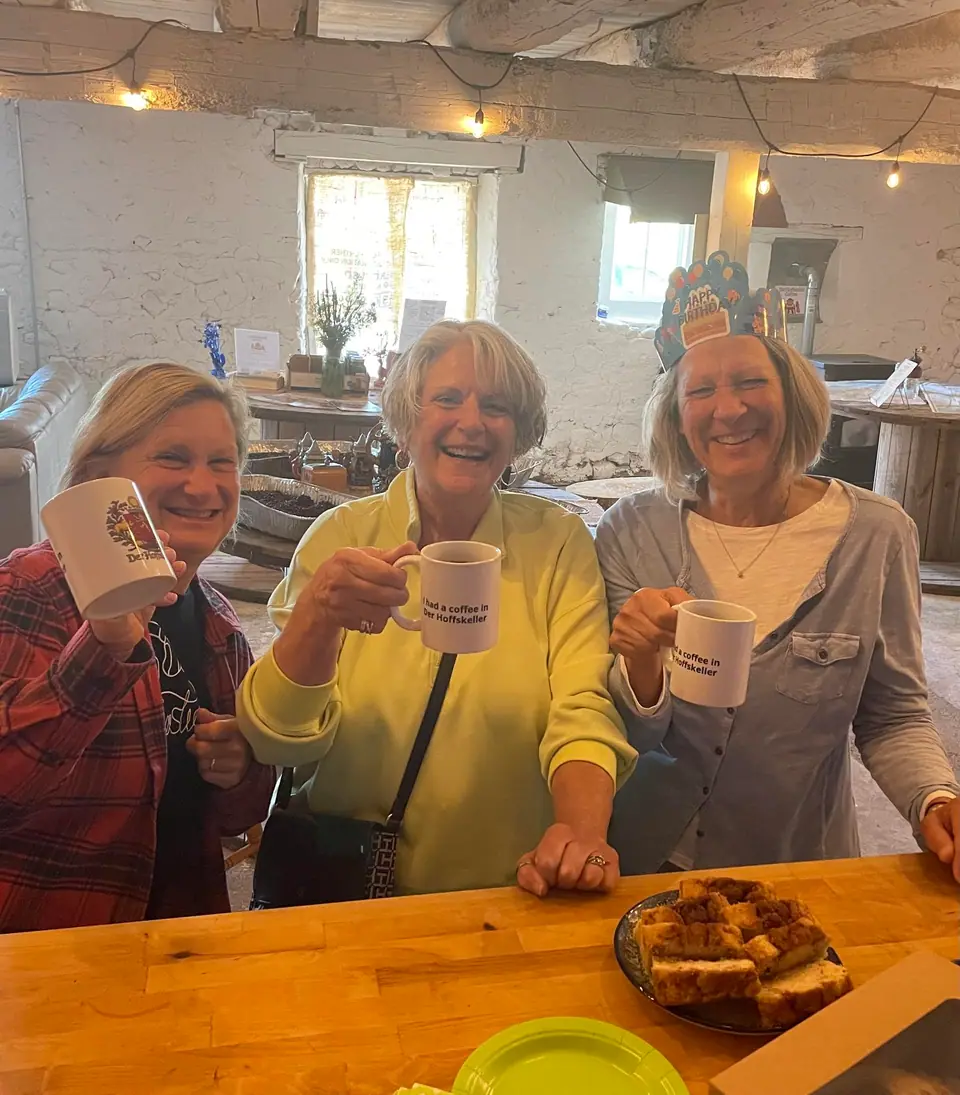
Our coffee's name, German Norwegian, comes from our family heritage and the spread of roast levels in each batch, not from how Norway roasts today. As our story puts it, "Germans opt for a darker roast while Norwegians prefer a lighter variety." We roast one coffee, 100% Colombian Supremo Arabica (Supremo is Colombia's grade for the largest beans by screen size), medium-dark, in a cast iron drum roaster. It is one roast that releases beans at different points, so each batch holds a spread of roast levels: by the time the first beans reach the second crack, others are still a few shades lighter. More on that in the story behind our German Norwegian roast.
To put it plainly: if you want the bright, light cup of a modern Oslo cafe, our coffee is not it, and we do not make a light roast. Look for a roaster that works in the Nordic style. If you want a darker pot that customers describe as smooth, bold and good black, read on.
“We are enjoying our first order! We (both 50% German and he is 50% Norwegian) both LOVE IT!”
Cheryl M, Facebook, December 2025
Norwegian-American coffee
Muskego, Wisconsin's first organized Norwegian colony, dates to 1839, as we cover in our history of Wisconsin immigration. Across the Upper Midwest, Scandinavian-American Lutheran churches became known for big pots of coffee after services and at gatherings, and some cooks stirred a raw egg into the grounds to clear the pot. That is egg coffee, and it has its own guide: Scandinavian egg coffee.
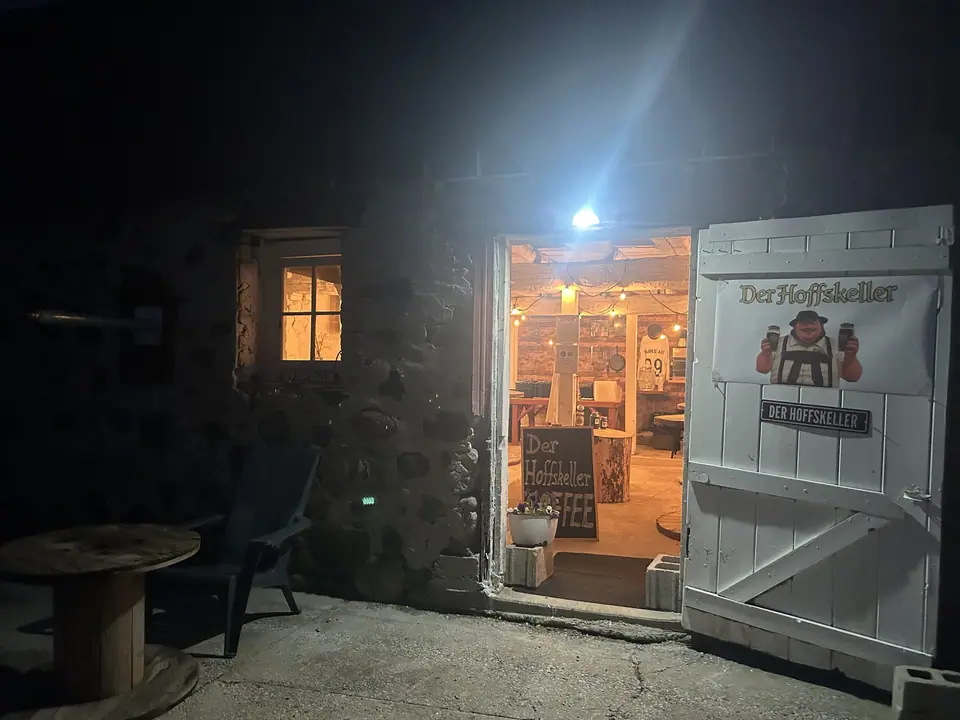
Our own family history includes immigrants from both Germany and Norway. Our farm in Cedarburg was part of an early German settlement in the 1860s, and the barn where we roast has been in the family since 1944. One customer who grew up in Minnesota put it this way.
“The coffee reminds me of my parents brewing coffee everyday! I grew up in Minnesota with Swedish- German roots!”
Linda S, Facebook, September 2026
Making it with our coffee
For kokekaffe or a daily pot, the ground Big Hoff Bag (2 lb, $34) is a practical size. At 65 grams per liter it makes about 14 liters of kokekaffe, close to 60 eight-ounce cups, and at standard drip strength about 70 cups (both estimates). If you grind at home, order the Big Hoff Bag in whole bean. To try it first, The Hoff is 1 lb of ground for $25. We roast in small batches on a regular schedule, and it ships within days of roasting in nearly all cases. We make no decaf, no flavors and no pods, and we ship by USPS to US addresses only, free on orders of $50 or more.
Norwegian coffee questions
Do Norwegians drink a lot of coffee?
Yes. Norway drinks about 9.9 kilograms of coffee per person a year, second only to Finland, by World Population Review figures reported by StoneX in 2023. That is roughly two eight-ounce cups a day for every person, children included (our estimate at 35 cups per pound).
What is kokekaffe?
Norwegian boiled coffee. You boil water, take it off the heat, stir in about 65 grams of coffee per liter, steep 4 to 5 minutes, let the grounds settle, and pour slowly off the grounds. It is a favorite outdoors and around a fire.
Do Norwegians drink dark roast?
Many do. Norway's specialty roasters are known for light roasts, and one Norwegian roaster says the Norwegian roast has always been lighter than Swedish or Finnish roasts. But a guide for newcomers to Norway says Norwegians have historically favored darker roasts, and dark roast is still a staple there.
Can I make kokekaffe with ground coffee?
Yes. Pre-ground coffee is usually finer than the coarse grind Norwegian guides call for, so steep it a little shorter, closer to 4 minutes, and pour slowly so the grounds stay in the pot. Our ground coffee works this way as it comes.
Is egg coffee Norwegian?
It is a Scandinavian-American tradition from Lutheran church kitchens in the Upper Midwest, and it goes by both Swedish and Norwegian egg coffee. It is a cousin of kokekaffe; our guide to Scandinavian egg coffee has the history and the recipe.
Is Der Hoffskeller a Norwegian coffee?
No. We are a Wisconsin family with German and Norwegian roots, roasting one medium-dark Colombian Supremo in cast iron in our barn in Cedarburg. The name stands for both sides of the family and the spread of roast levels in each batch.
Put the water on, measure your coffee, and give it four minutes. For more on brewing, buying and the traditions behind the cup, see our coffee guides.