
The Best Coffee for a French Press (and How to Use Ground Coffee in One)
The best coffee for a French press is usually a fresh medium or medium-dark roast, which gives a press its full, rounded body without tasting thin or scorched. Our ground coffee works in a press as it comes: steep about four minutes, or a little less, press slowly, let it settle a minute, then pour it all off the grounds. If you grind whole beans at home, grind them coarse.
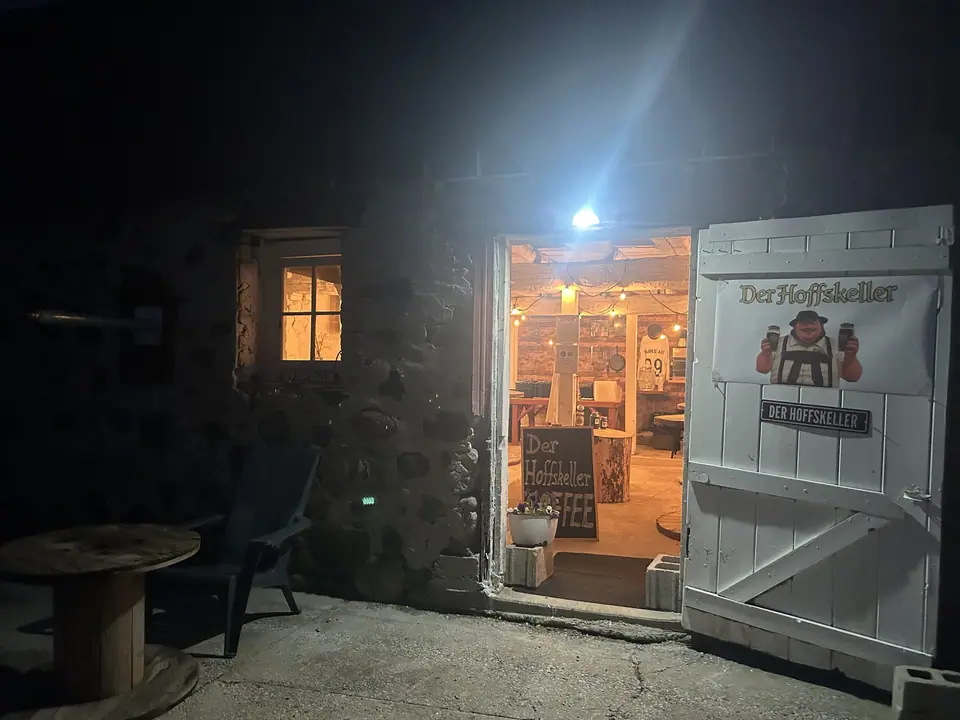
We roast one coffee, 100% Colombian Supremo Arabica, in cast iron in our family barn in Cedarburg, Wisconsin, and several of our reviews come from customers who brew it in a press. The usual advice is a coarse grind, and our ground coffee is finer, so here is plainly how to make the two work together, how much coffee your press needs, and how to fix a cup that comes out muddy, bitter or weak.
Why roast matters in a press
A French press is an immersion brewer: the grounds sit in the water, then a metal mesh screen holds them back while you pour. Our FAQ puts it simply: "Paper produces a cleaner cup and holds back oils. Metal lets the oils through for a heavier body." That body is the appeal of a press, and the roast shapes much of it. For the anatomy of the brewer, see the French press, its history and how it works.
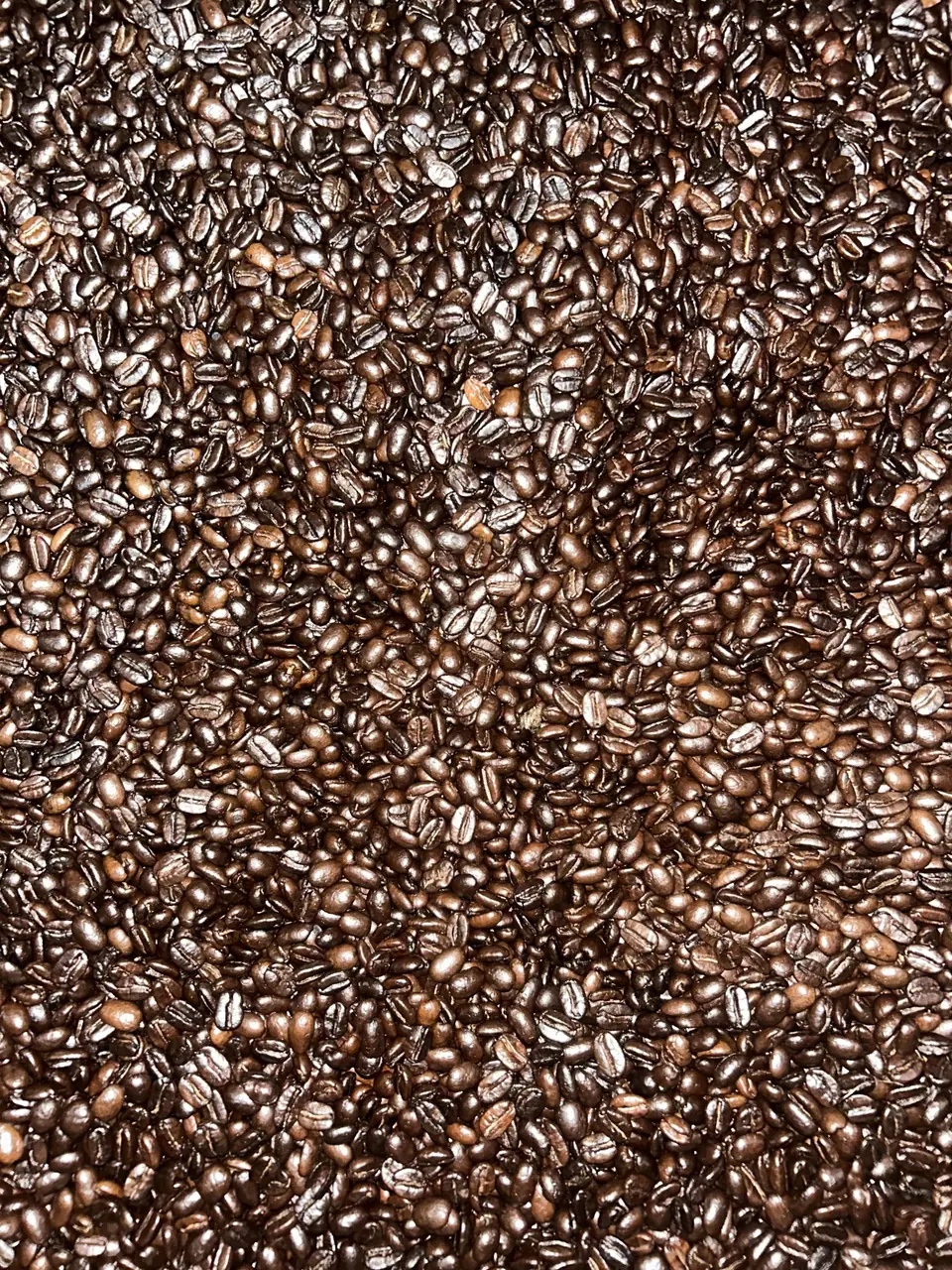
Many specialty roasters roast light to bring out acidity and fruit notes. Dark roasts can turn heavy and smoky in a press. A medium-dark roast sits between the two. The light sheen on its beans is oil that moved to the surface as the roast developed, and a metal screen lets those oils into the cup.
Ours is medium-dark in what we call the German Norwegian style: one roast that releases beans at different points, so each batch holds a spread of roast levels, some darker the way Germans like it and some lighter the way Norwegians do. We began in a cast iron pan, then built custom cast iron stovetop roasters, and now use a cast iron drum roaster. Supremo is Colombia's grade for the largest beans by screen size.
If you love a bright, fruity cup, a light roast from a specialty roaster will suit your press better, and we would rather say so. We also do not make decaf or flavored coffee.
“Some of the best coffee I've ever tasted. I make it in my French press and it's absolutely perfect every time”
Kave D, Facebook, April 2026
Using our ground coffee in a French press
Most guides call for a coarse grind in a press, and for good reason: big particles give up their flavor slowly over a four-minute steep, and the screen catches them easily. Our ground coffee is one medium-fine grind that works for every brew method, espresso included. Our FAQ gives the one adjustment: "Our ground coffee works in a French press as it comes. Steep about four minutes, or a little less if you like a lighter cup."
A finer grind gives up its flavor a little faster and lets a few fine particles past the screen. Neither is a problem if you brew like this:
- Heat the water to just off boiling, around 200°F. Boiling water poured straight onto the grounds pulls out harsher flavors.
- Add the coffee: two tablespoons per six ounces of water to start. The table below works it out for your press.
- Pour in all the water and stir gently once. The bubbling crust on fresh coffee is carbon dioxide escaping, a sign of a recent roast.
- Put the lid on and steep about four minutes, or about three and a half for a lighter cup.
- Press slowly. If the plunger pushes back, ease off. Pushing hard forces fine particles through the screen.
- Let it settle a minute, then pour all of it into mugs or a thermal carafe, leaving the last half inch of silt in the press.
“It's delicious in a French press, steeped for 4 minutes.”
Dixie D, Facebook, July 2026
If you grind at home, order whole bean. Many people who grind their own beans use a coarse grind for a press and steep the full four minutes. A simple blade grinder is what we recommend. More in whole bean vs. ground coffee.

How much coffee for your press
Our house rule, from the FAQ, is to start with two tablespoons per six ounces of water and adjust from there. With a scale, brewing guides commonly put the French press at 1:15 to 1:17 by weight, about 30 grams of coffee to 500 milliliters of water (LAMOSE ratio guide). The gram figures below are estimates at about 5 grams per level tablespoon of ground coffee.
| Press size (water) | Our rule: tablespoons | About, in grams (est.) | At 1:16 by weight |
|---|---|---|---|
| 12 oz (3-cup press) | 4 | 20 g | 22 g |
| 17 oz (4-cup press, 0.5 liter) | 5 to 6 | 28 g | 31 g |
| 34 oz (8-cup press, 1 liter) | about 11 | 57 g | 63 g |
| 51 oz (12-cup press, 1.5 liters) | about 17 | 85 g | 94 g |
By our estimate, the tablespoon rule lands a little milder than 1:16, near 1:18, so add a spoonful if you like it stronger. The grounds hold back some water, so a 34 oz press pours close to four 8-ounce cups. Every brewer side by side: coffee to water ratio.
Muddy, bitter or weak?
- Muddy or gritty: press slower, let it settle the full minute, pour gently and leave the last half inch behind. A metal screen always lets a little silt through; for a cleaner cup, pour it through a paper filter. Papery flakes on top are chaff, the silverskin of the bean. We keep more of it in our roast, and it is part of the coffee.
- Bitter: shorten the steep by thirty seconds, let the water cool a moment off the boil, and never leave the coffee sitting on the grounds. More in why is my coffee bitter.
- Weak or thin: use more coffee before you change anything else. Most weak coffee is under-dosed, not under-brewed.
- Flat or stale: keep coffee sealed in an airtight container, like a Mason jar, in a cool, dark cupboard. Our FAQ advises against the freezer, which introduces moisture. Wash the screen now and then, since old coffee oils go rancid.

Which of ours to buy for a French press
If you do not grind at home, choose ground. At about 57 grams a pot, the Big Hoff Bag, ground (2 lb, $34) makes roughly 16 pots in a 34 oz press, about $2.13 a pot (estimates). To try it first, the Little Hoff, ground is 1/2 lb for $15 and The Hoff, ground is 1 lb for $25. Orders of $50 or more ship free; below that, USPS shipping is added at checkout.
If you grind coarse at home, choose whole bean: The Hoff, whole bean (1 lb, $25) or the Big Hoff Bag, whole bean (2 lb, $34). On a subscription, either grind of the Big Hoff Bag is $30 a delivery, weekly, every 2 weeks or monthly (monthly: ground or whole bean), plus shipping, since one bag is under $50. Subscriptions have a two-delivery minimum, and you manage deliveries online through a secure emailed link.
We roast in small batches on a regular schedule, and it ships within days of roasting in nearly all cases, by USPS to US addresses only. Customers describe it as smooth, bold and low in acid, and good black, which suits a brewer that hides nothing. More in coffee you can drink black.
“Just received my order. Brewed a pot in my french press. Tastes great. I was skeptical but it was worth it.”
Dillon K, verified buyer, July 2026
Questions about French press coffee
Should I use a coarse or medium grind in a French press?
Coarse is the standard advice when you grind whole beans at home. Our ground coffee is one medium-fine grind, and it works in a press as it comes: steep about four minutes or a little less, press slowly, let it settle a minute and pour it off the grounds. Regular pre-ground coffee from the store works the same way; expect a little more sediment than with a coarse grind.
Can I leave the coffee in the press after brewing?
No. The grounds keep brewing as long as the coffee sits on them, and it turns bitter. Once it settles, pour it all into mugs or a thermal carafe, which keeps a second cup hot without more brewing.
How much coffee do I use for a 34 oz French press?
About 11 tablespoons, roughly 57 grams (an estimate), by our rule of two tablespoons per six ounces of water. If you weigh it at 1:16, use about 63 grams. Start there and add a spoonful next time if you like it stronger.
Is French press coffee stronger than drip?
It tastes heavier, because the metal screen lets through oils and fine particles that a paper filter holds back. How strong it is comes down mostly to how much coffee you use for the water. At the same ratio, the press cup tastes fuller, not necessarily stronger.
A good pot, start to finish
Medium-dark coffee, two tablespoons per six ounces, about four minutes, a slow press, a minute to settle and a careful pour: that is the whole method. Near Cedarburg? The barn at 1040 Sherman Road is open every day from 9 to 5, with a free cup of coffee for visitors. For drip, pour over, moka pots and other brewers, browse more coffee guides.