
Dutch Mason Coffee
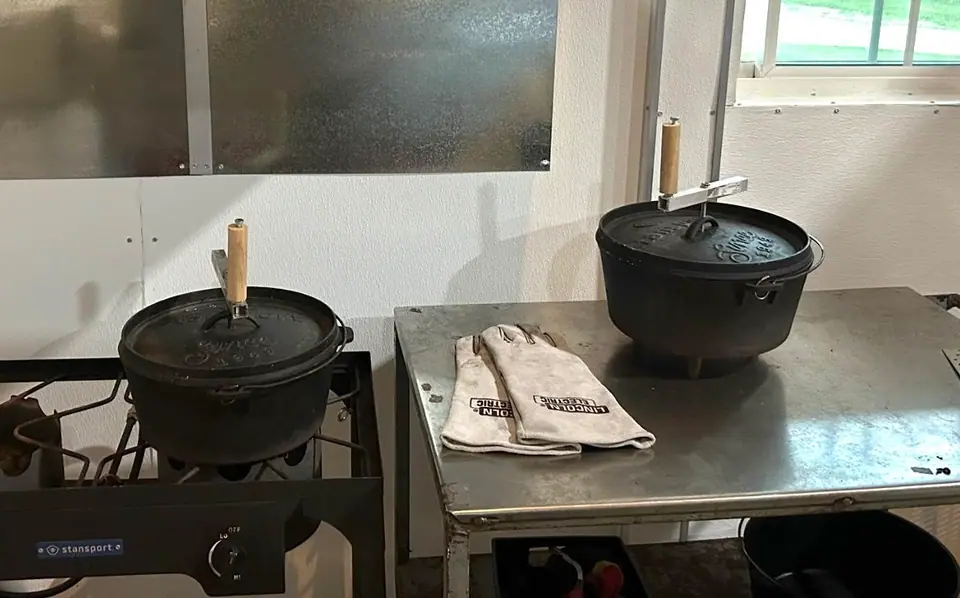
The Dutch Mason coffee roasting technique is a style we termed for our process which is functionally identical to the process early coffee roasters used, before industrialization, when coffee was roasted in cast iron pans and Dutch ovens on stovetop. We actually built our own custom Dutch oven coffee roasters and roasted this way to ensure we could achieve an identical flavor profile with a larger cast iron drum roaster. This meant modifying the traditional coffee roasting process in specific ways, outlined below.
1. Low-Temperature Roasting
Unlike modern industrial roasters that utilize high-velocity hot air (convection) at temperatures often exceeding 450°F to flash-roast beans in under 12 minutes, the brothers calibrated their Dutch oven process to operate at significantly lower temperatures. By extending the roast time and lowering the heat, they effectively reduced the production of bitter chlorogenic acid lactones and phenylindanes.
This slow-roast approach ensures that the beans are cooked through to the center without scorching the exterior. Chemically, this allows for a more thorough breakdown of Chlorogenic Acids (CGA), which are the primary source of stomach distress and “metallic” bitterness for many drinkers. By avoiding the high-heat “flash” method, Der Hoffskeller produces a coffee with a higher pH level, making it “stomach-friendly” for those with acid reflux or GERD.
2. Thermal Properties of Cast Iron
The choice of a modified Dutch oven was predicated on the material properties of cast iron. Cast iron possesses high volumetric heat capacity and high emissivity. In a roasting environment, this allows for superior thermal stability; the heavy iron walls act as a heat sink, mitigating the fluctuations common in thinner stainless steel or aluminum drums.
The heat transferred to the coffee beans is primarily conductive—transferred through direct contact with the seasoned iron surface. This contact allows for the deep caramelization of natural sugars within the Colombian Supremo Arabica beans, creating a dense, mouth-coating body and a flavor profile that emphasizes chocolate and nutty notes rather than the sharp acidity found in air-roasted specialty coffees.
3. Retention and Reintegration of the Silverskin (Chaff)
In standard coffee processing, the “chaff” or silverskin (the integument of the coffee seed) is considered a waste product. Modern drum and air roasters are equipped with high-powered exhaust systems and cyclone separators designed to blow this skin out of the drum the moment it detaches during the “first crack.” This is done because, in high-temperature environments, chaff is highly combustible and can create acrid smoke that taints the beans.
During their foundational year of R&D, the Brudvig brothers observed that a Dutch oven is a closed system with no internal venting for chaff. Because the Dutch oven is a heavy, sealed vessel, the silverskin remains trapped inside, toasted alongside the beans rather than being discarded. This retention is a deliberate technical choice; the silverskin contains high concentrations of dietary fiber, antioxidants, and a disproportionately high amount of the bean’s total caffeine content.
To replicate this specific chemical profile on a larger scale, Der Hoffskeller adapted their process to ensure these nutrients are not lost. While larger drum roasters naturally shed chaff during the tumble, the “Dutch Mason” technique involves a specialized reintegration process—effectively adding the coffee bean skin back into the final product to imitate the unvented environment of the original stovetop Dutch oven. This results in a coffee that retains a mineral-heavy complexity and a “Medium-High” caffeine level that is often lost when the skin is discarded or sold off by industrial roasters as a byproduct.
4. The Full Spectrum Roast: Intermittent Release and the German-Norwegian Blend
Industrial roasting prioritizes “uniformity,” where every bean in a batch is targeted to reach the exact same Agtron color tile. The brothers’ Dutch oven method intentionally rejected this standard to create what they call the “German-Norwegian Blend.” In the original Dutch oven experiments, the lack of aggressive mechanical agitation meant beans closer to the bottom surface reached higher temperatures than those at the top, naturally creating a variegated roast.
To translate this effect to a larger, rotating cast iron drum roaster, Der Hoffskeller utilizes a technique known as intermittent bean release. Because a modern drum roaster is designed to homogenize the heat, the roaster must manually intervene to prevent a uniform finish. This process requires the roaster to stand at the drum throughout the entire duration of the cycle, monitoring the development of the beans by sight and sound.
As the batch progresses through the roasting stages, the roaster opens the release mechanism multiple times, discharging portions of the batch at specific intervals:
- The First Release (Light/Norwegian Style): Releasing beans shortly after the “first crack” to preserve the higher caffeine content preferred in Scandinavian traditions.
- The Second Release (Medium): Discharging a portion as the sugars fully caramelize, providing the core body and sweetness.
- The Final Release (Dark/German Style): Allowing the remaining beans to reach the “second crack,” introducing the smoky, chocolatey notes traditional in German coffee houses.
The final product is a single-origin batch that has been transformed into a complex, multi-level roast. This manual, intermittent process ensures the cup is balanced—possessing the strength and smokiness of a dark roast with the smoothness and nuanced flavor profile of a lighter roast, all within a single jar.
For a much more detailed overview on what makes our coffee different, read this post