

Cowboy Coffee: How to Make It Over a Fire, on a Stove or at the Cabin
To make cowboy coffee, use about 2 tablespoons of ground coffee for every 8 ounces of water. Bring the water to a boil, take the pot off the heat for half a minute, stir in the coffee, cover it and steep about 4 minutes, stirring once halfway. Splash in a little cold water to sink the grounds, then pour slowly. No filter needed.
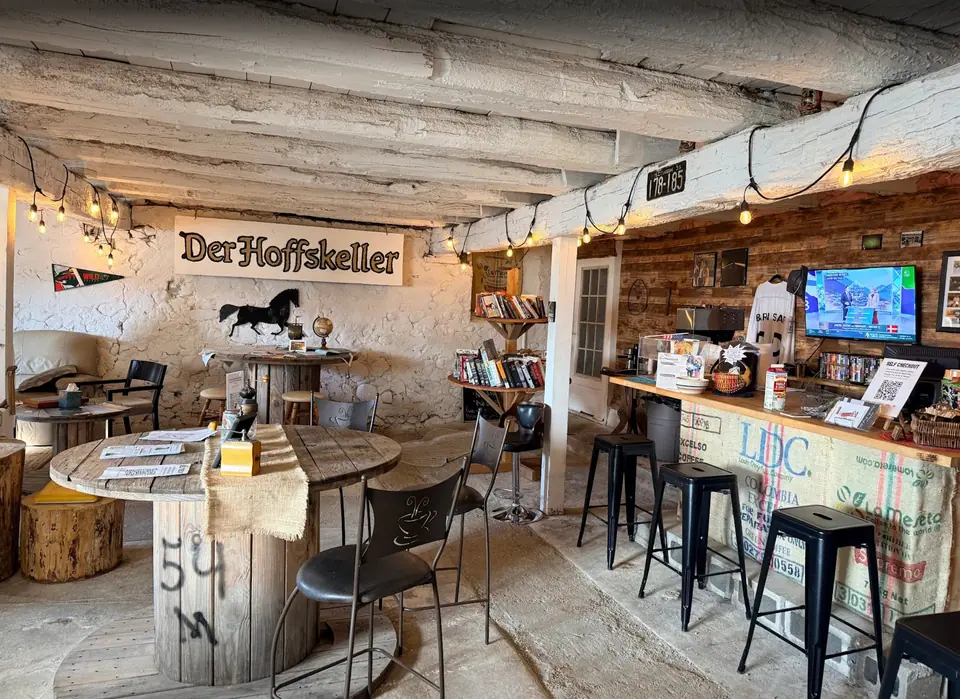
It works over a campfire, a camp stove or the cabin range. We roast coffee in our family's barn in Cedarburg, Wisconsin, and sell no camp gear, so here is just the method and how it compares with a percolator or press.
What cowboy coffee is
Cowboy coffee is coffee steeped loose in an open pot, with no filter, basket or plunger. The grounds brew in hot water, settle to the bottom, and you pour the coffee off the top. It needs nothing you would not pack for cooking anyway.
Boiled hard, it earns its reputation for bitterness. Our FAQ puts it plainly: "Boiling water poured directly on the grounds will pull out harsher flavors." So boil the water, let it drop just off the boil, around 200 degrees Fahrenheit, and only then add the coffee. Made that way, say the camping writers at OutdoorHub, it is as smooth as coffee from fussier gear.

The recipe
- Measure the water into the pot with an 8-ounce mug, and make only what your group will drink right away.
- Bring it to a boil over the fire or the stove.
- Take it off the heat for about 30 seconds, until it stops boiling.
- Stir in the coffee, 2 tablespoons per 8 ounces of water. Push the floating grounds under with a long spoon.
- Cover and steep 2 minutes, stir gently, then cover and steep 2 minutes more.
- Splash in cold water, a tablespoon or two, and give it a minute to settle.
- Pour slowly from one side and leave the last half inch in the pot.
These steps follow OutdoorHub's camp method. For a stronger cup, use our FAQ's starting point, "two tablespoons per six ounces of water," and adjust from there.
| Cups (8 oz) | Water | Coffee, camp standard (2 tbsp per 8 oz) | Stronger (2 tbsp per 6 oz) | Steep |
|---|---|---|---|---|
| 2 | 16 oz | 4 tbsp (1/4 cup) | about 5 tbsp | about 4 minutes |
| 4 | 32 oz (1 quart) | 8 tbsp (1/2 cup) | about 11 tbsp (2/3 cup) | about 4 minutes |
| 8 | 64 oz (2 quarts) | 16 tbsp (1 cup) | about 21 tbsp (1 1/3 cups) | about 4 minutes |
Use a pot with room to spare, about 1 1/2 quarts for 4 cups and 3 quarts for 8, so you can stir without slopping coffee into the fire. Most coffee scoops hold about 2 tablespoons, which makes the camp standard one scoop per mug.
Keeping the grounds out
The cold-water splash is the old trick. The usual explanation is that cold water is heavier than hot, so it sinks and carries the floating grounds down with it. A tablespoon or two is enough, and a couple of taps on the side of the pot help.
Then pour slowly, from one side, in one steady motion, so the settled grounds stay put. Pour every cup at once or move the rest into an insulated bottle; coffee left in the pot keeps steeping and turns strong and bitter.
For the clearest cup, there is the egg. Scandinavian-American cooks mash a raw egg into the grounds and boil it a few minutes; the egg gathers the grounds into a clump, and the coffee pours clear and mild. Our guide to Scandinavian egg coffee has the full recipe.
Cowboy coffee, percolator or press at camp
Cowboy coffee needs only a pot, with nothing extra to clean or break, at the cost of a little sediment in the last sip.
A percolator is the classic camp pot. Water cycles up a tube and over a basket of grounds, so the cup comes out cleaner. Asked whether our coffee works for camping, our FAQ answers: "It holds up in a percolator over a fire, which is exactly the kind of brewing this roast was built for." Our percolator guide starts at about 1 tablespoon per cup of water and shows how to perk it without bitterness.
“Great coffee,even better when fixed in a percolator”
Donnie S, Facebook, July 2026
A French press holds the grounds back behind a screen after the same four-minute steep, but it is one more thing to pack, and a glass one does not love a camp box. More in our guide to the best coffee for a French press.
Packing coffee for camp
For a camp box or a camper on the move, our FAQ's advice is simple: "Move some into a smaller sealed container so a glass jar is not sliding around." A screw-top canister works, or a small sealed bag for each morning. Keep it dry, out of the sun and out of the cooler, which is damp and full of smells. At home, an airtight container like a Mason jar in a cool, dark cupboard is right; more in Mason jar coffee storage.
How much to bring: four people drinking two 8-ounce cups each morning for three days is 24 cups. At standard strength, about 35 cups per pound, that is a little over two-thirds of a pound (our estimate), so bring a full pound. As our FAQ says, "People drink more coffee than they say they will." A week at the cabin for the same family, 56 cups, is roughly a 2 lb bag (estimate).
Unless a grinder is coming along, pack ground; more in whole bean vs. ground coffee.
“Delicious! Tried it yesterday and bought a jar for the camper! At the Saukville Farmers market”
Debbie V, Facebook, August 2025

Which coffee to use
Any regular ground coffee makes good cowboy coffee; OutdoorHub notes that drip grind is fine. A coarse grind sinks fastest and leaves the least silt, which is why many campers who grind their own beans set the grinder coarse.
Our ground coffee is one medium-fine grind that works for every brew method, cowboy coffee included. Medium-fine grounds sink a little slower than coarse, so give the pot an extra minute after the cold splash and pour slowly. If a cup tastes bitter, steep 3 minutes instead of 4. If you grind at home, order whole bean.
It is 100% Colombian Supremo Arabica, roasted medium-dark in cast iron on our family farm, German Norwegian style: one roast that releases beans at different points, so each batch holds a spread of roast levels. Customers describe it as smooth, bold and low in acid, and good black, which helps when the creamer stayed home.
For a week of camping, the Big Hoff Bag, ground is 2 lb for $34, about 70 eight-ounce cups at standard strength (estimate). One bag is under $50, so USPS shipping is added; orders of $50 or more ship free. For a cabin full of family, our FAQ says "The King Hoff exists for exactly that": the King Hoff, ground is 7 lb for $105, about 245 cups (estimate), and ships free. Our FAQ also says ground coffee "is best within a few weeks" of opening, so the King suits a busy cabin and the 2 lb bag a smaller group. Orders typically go out within a few business days by USPS, US addresses only (estimates, not guarantees), so order a week or two before you leave (see shipping).
We make one coffee: no decaf, no flavors, no pods, no light roast. For a decaf last pot around the fire, bring one from another roaster; the method is the same. For backpacking, where every ounce counts, instant coffee or steeping bags are lighter.
Cowboy coffee questions
How much coffee do you use for cowboy coffee?
About 2 tablespoons of ground coffee per 8 ounces of water: 1/2 cup for a quart (4 cups) and 1 cup for 2 quarts (8 cups). For a stronger pot, use two tablespoons per six ounces.
Do you boil cowboy coffee?
Boil the water, not the coffee. Take the boiling water off the heat for about 30 seconds so it drops to around 200 degrees Fahrenheit, then stir in the grounds and steep. Boiling the grounds pulls out harsh, bitter flavors, which is where cowboy coffee got its reputation.
How do you keep grounds out of cowboy coffee?
Add a tablespoon or two of cold water after steeping, tap the pot and wait a minute so the grounds sink. Pour slowly and leave the last half inch behind. For a clearer cup, use an egg, Scandinavian style, or a small mesh strainer.
Can I use regular ground coffee for cowboy coffee?
Yes. Drip grind works, and a coarse grind settles fastest. Our ground coffee is one medium-fine grind that works for every brew method; with it, let the pot settle an extra minute after the cold splash and pour slowly.
What is the difference between cowboy coffee and egg coffee?
Both are brewed loose in a pot with no filter. In egg coffee, a raw egg mashed into the grounds gathers them into a clump, so the coffee pours clear and mild. Cowboy coffee skips the egg and relies on a cold splash and a careful pour.
Can I make cowboy coffee on a stove?
Yes. A camp stove, kitchen range or cabin wood stove works the same way, and it is easier to control than a fire, so it is a good place to practice before the trip.
A good pot by the fire
Water to a boil, half a minute off the heat, 2 tablespoons per mug, 4 minutes covered, a cold splash and a slow pour. If you are near Cedarburg, the barn at 1040 Sherman Road is open every day from 9 to 5, and the first cup is on us. For percolators, presses, pour over and more, browse more coffee guides.