
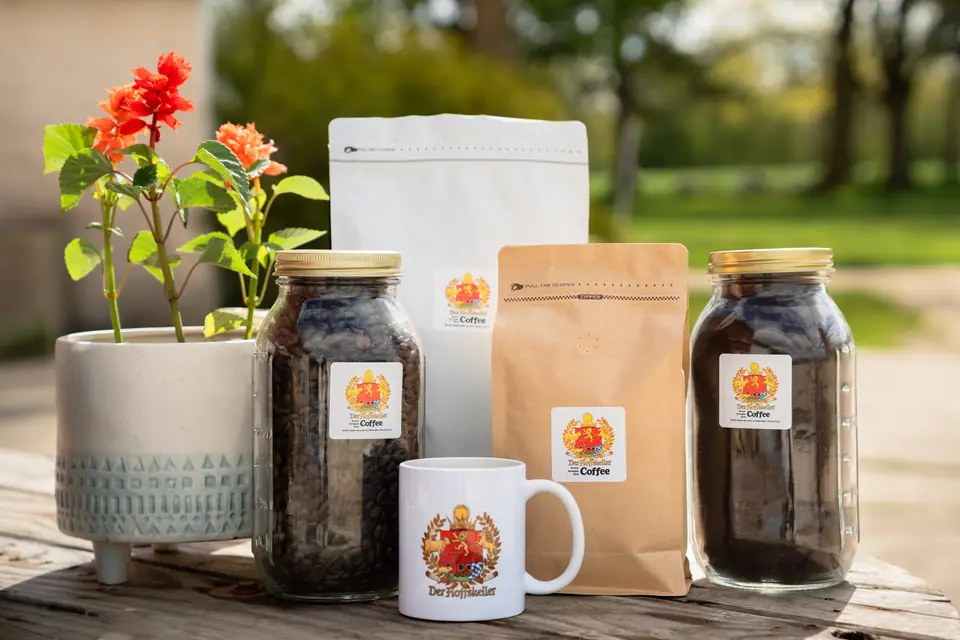
How to Choose Coffee Beans: What Every Line on the Bag Tells You
To choose coffee beans, read six things on the bag: the roast level, the roast date, the origin, the species, whole bean or ground, and the price per pound. Pick the roast that suits your taste and your brewer, look for a recent roast date, buy what you will finish within a few weeks of opening, and compare prices by the pound, not the bag.
We are a family that roasts one coffee in cast iron in a barn in Cedarburg, Wisconsin, so we read labels from the roaster's side of the counter. This checklist works for any coffee from any roaster. At the end we run our own coffee through it as one worked example.
The 30-second checklist
Not every bag prints every line, and a missing line tells you something too.
| Line on the bag | What it means | What to look for |
|---|---|---|
| Roast level | How far the beans were roasted | Light for bright and fruity, medium or medium-dark for balanced, dark for smoky and heavy |
| Roast date | The day it came out of the roaster | A recent date, and a bag you will finish within a few weeks of opening |
| Best-by date | The packer's guess at when it tastes flat | A backup only; it does not tell you the coffee's age |
| Origin | Where the beans grew: one place or a blend | Single origin for the character of one place, a blend for a cup built to taste much the same all year |
| Grade | How the green beans were sorted, often by size | Useful to know, but it describes the bean, not the flavor |
| Species | Arabica, robusta or a mix | "100% arabica" for a smoother cup; robusta is stronger and more bitter |
| Whole bean or ground | Who does the grinding | Whole bean if you own a grinder, ground if you don't |
| Net weight and price | How much coffee you get for the money | Price per pound, then per cup at about 35 eight-ounce cups a pound (estimate) |
| Ingredients | What is in the bag | Coffee and nothing else, unless you want a flavored coffee |
Roast level
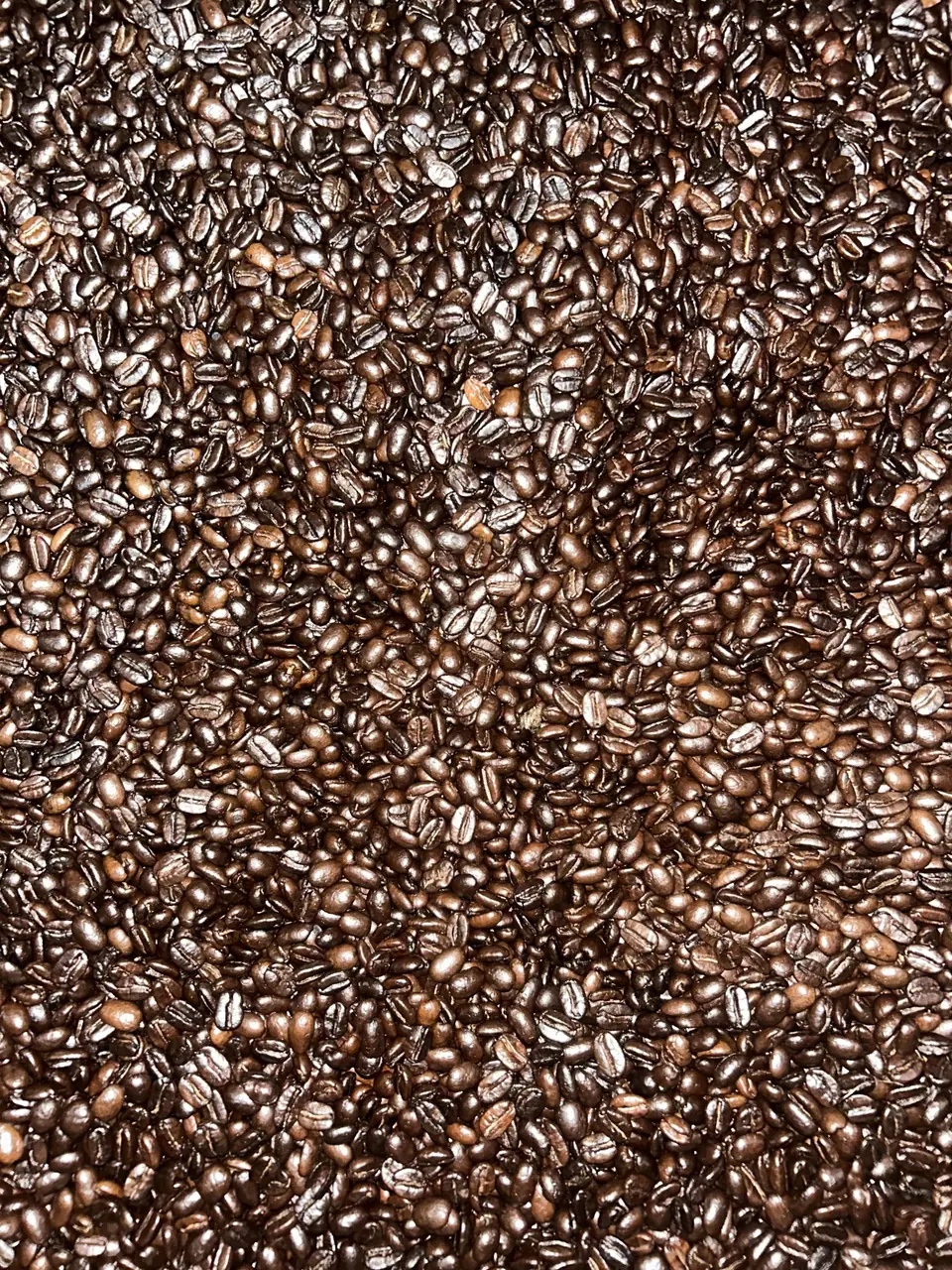
Roast level shapes the taste more than anything else on the bag. Light roasts keep more of the bean's own character and taste bright and acidic. Dark roasts trade that for smoky, heavy flavors; French roast and Italian roast are names for dark. Medium and medium-dark sit between, with more body and less sharpness.
Choose by what you like in the cup. If you love bright, fruity coffee, buy a light roast from a roaster who specializes in it; ours will not be your favorite. If you want classic coffee, black or with cream, medium to medium-dark is the forgiving middle, and it works in a drip machine, a press or an espresso machine without tasting thin or scorched. More in our guide to medium-dark roast.
Roast date vs best-by
Coffee does not spoil the way milk does; it fades. Flavor is at its best in the first few weeks after roasting and drops off gradually, so a roast date is the most useful number a bag can print. A best-by date is the packer's guess at when the coffee goes flat, and it can be set many months after roasting.
Buy an amount you will finish within a few weeks of opening: whole beans hold well for several weeks after opening, and ground coffee is best within a few weeks. Keep it in an airtight container, like a Mason jar, in a cool, dark cupboard. Our FAQ advises against the freezer, because "The freezer introduces moisture." More in how long coffee beans last.
Origin and grade
Origin tells you where the beans grew. Single origin means one place, which can be a whole country, a region or a single farm, so read how narrow the bag gets. A blend mixes beans from several origins to balance flavor or cost, and many grocery store coffees are blended from several origins and grades. Neither is better by itself. See single origin vs blend.
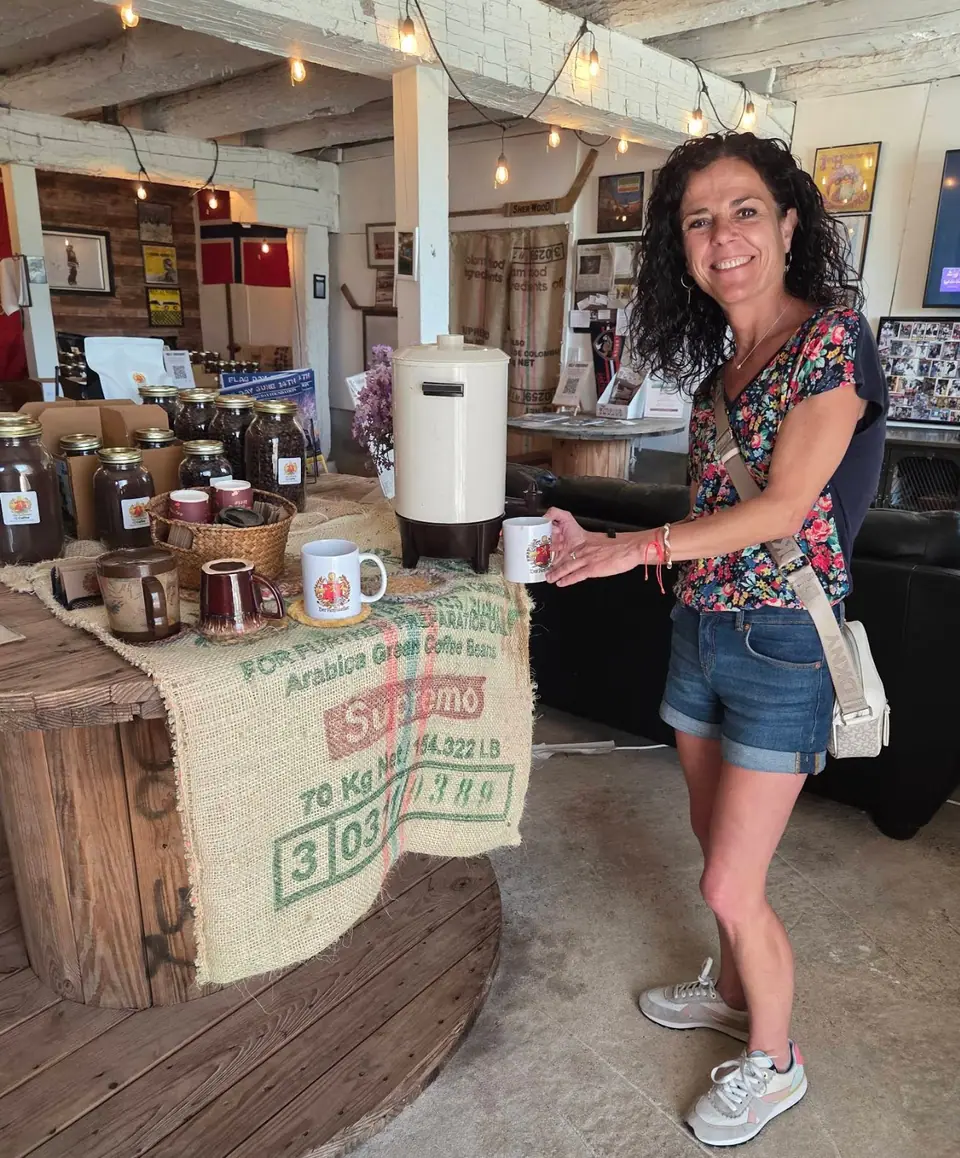
Grade words describe how the green beans were sorted. Supremo, for example, is Colombia's grade for the largest beans by screen size, the sieve the beans are sorted through. Larger beans roast evenly, which matters to a roaster, but a grade is not a promise of flavor; roasting and freshness still decide the cup. More on Colombian Supremo coffee.

Species
Nearly all coffee sold is one of two species. Arabica grows at higher elevation, tastes smoother and carries less caffeine. Robusta is hardier, cheaper, more bitter and higher in caffeine, and it is common in low cost blends and instant coffee. A bag that says "100% arabica" has no robusta in it; a bag that only says "coffee" may have some.
Robusta is not a mistake: if you like a strong, bitter edge, it delivers one. If you want a smoother cup you can drink black, start with 100% arabica, then read the rest of the bag, since species says nothing about roast or freshness. More in arabica vs robusta.
Whole bean or ground
Whole beans hold their aroma longer, because grinding exposes far more of the coffee to air. If you own a grinder, buy whole bean. Ground is the practical choice if you don't want another step, and it does fine if you finish it within a few weeks.
If a roaster offers several grinds, pick the one for your brewer. Our ground coffee comes one way: one medium-fine grind that works for every brew method, espresso included. If you grind at home, order whole bean. More in whole bean vs ground coffee.
Price per pound and per cup
Bags come in different weights, so the sticker price can fool you. Divide the price by the pounds, then by about 35 for an estimated price per 8-ounce cup. That 35 assumes standard strength, the Specialty Coffee Association's golden cup ratio; our FAQ says "Start with two tablespoons per six ounces of water." Check per-ounce prices even inside one shop, because bigger is not always cheaper: our own 3.5 lb Queen Hoff costs a hair more per ounce, one-time, than our 2 lb bag.
For a baseline, the U.S. Bureau of Labor Statistics put the average grocery price of 100% ground roast coffee at $9.33 a pound in September 2026. Fresh roasted coffee from a small roaster usually costs more.
| Coffee | Price | Per pound | Per 8 oz cup (estimate) |
|---|---|---|---|
| Grocery store ground coffee, U.S. average, September 2026 | n/a | $9.33 | $0.27 |
| The Hoff, 1 lb, one-time | $25 | $25.00 | $0.71 |
| Big Hoff Bag, 2 lb, one-time | $34 | $17.00 | $0.49 |
| Bulk, 20 lb, one-time | $250 | $12.50 | $0.36 |
Per-cup figures assume 35 eight-ounce cups per pound. Across every size, one-time or subscription, ours runs $11.50 to $30 a pound, about 33 to 86 cents a cup. The full arithmetic is in cost per cup of coffee.
Our bag, line by line
Our own coffee, run through the same checklist, mostly in the words of our FAQ:
- Roast level: medium-dark, German Norwegian style. One roast releases beans at different points, so each batch holds a spread of roast levels. We began in a cast iron pan, built custom cast iron stovetop roasters, and now use a cast iron drum roaster.
- Freshness: we roast in small batches on a regular schedule, and it ships within days of roasting in nearly all cases.
- Origin and grade: all Colombian, so single origin, graded Supremo, Colombia's grade for the largest beans by screen size.
- Species: "There is no Robusta and no filler in our coffee."
- Ingredients: "The coffee contains nothing but roasted coffee beans."
- Whole bean or ground: both, in every size.
- Price: $11.50 to $30 a pound, depending on size and subscription.
What it is not: we make no decaf, no flavors, no pods and no light roast, and we ship to US addresses only. As our FAQ puts it, "If you want single lot micro roasts with tasting notes, we are not that." Customers describe it as smooth, bold and low in acid, and good black. More in coffee you can drink black and what makes our coffee different.
“I’ve been a Medium Roast Kona Peaberry drinker for years, but find this coffee very tasty.”
Niki G, Facebook, July 2026
“It's a lot better than the "gourmet" coffee we were drinking.”
Melvin K, Facebook, July 2026
If the checklist points you toward a smooth medium-dark coffee, a pound is an easy first try: The Hoff, whole bean or The Hoff, ground, $25 as a one-time order. Shipping is free on orders of $50 or more and a few dollars by USPS below that. For more on choosing, brewing and buying, see all of our coffee guides.
Questions about choosing coffee beans
What does "100% arabica" mean?
Every bean in the bag is the arabica species, with no robusta mixed in. Arabica tastes smoother and carries less caffeine than robusta. It says nothing about roast level or freshness.
Is single origin coffee better?
Not automatically. Single origin shows one place and can change with each harvest; a blend mixes origins to balance flavor, hold it steady or lower the cost, and some blends are excellent. Choose by roast level and freshness first.
Which roast is best for a beginner?
Medium or medium-dark is the forgiving choice: it tastes like classic coffee, works in most brewers and is good black or with cream. If you already love bright, fruity flavors, start with a light roast instead.
What should good coffee beans cost per pound?
The Bureau of Labor Statistics put the U.S. average grocery price for ground roast coffee at $9.33 a pound in September 2026, about 27 cents a cup at standard strength (our estimate). Fresh roasted coffee usually costs more; ours runs $11.50 to $30 a pound, about 33 to 86 cents a cup (estimate).